

Why Quality Content and Backlinks Still Dominate Modern Search Algorithms
Why the Most Important Google Ranking Factors Still Start With Content and Links
Image metadata: Header image; photorealistic; SEO strategy; 2026.
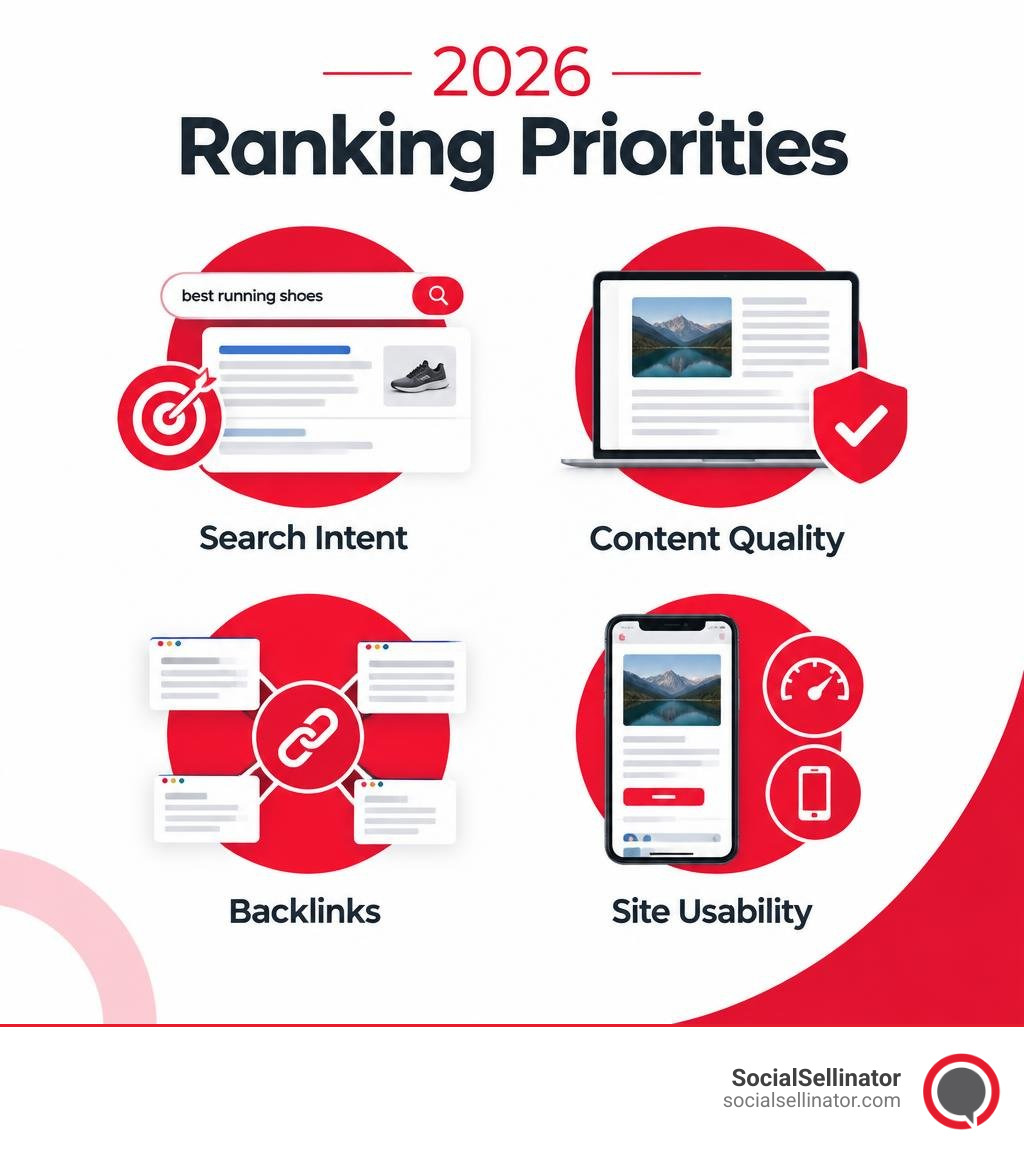
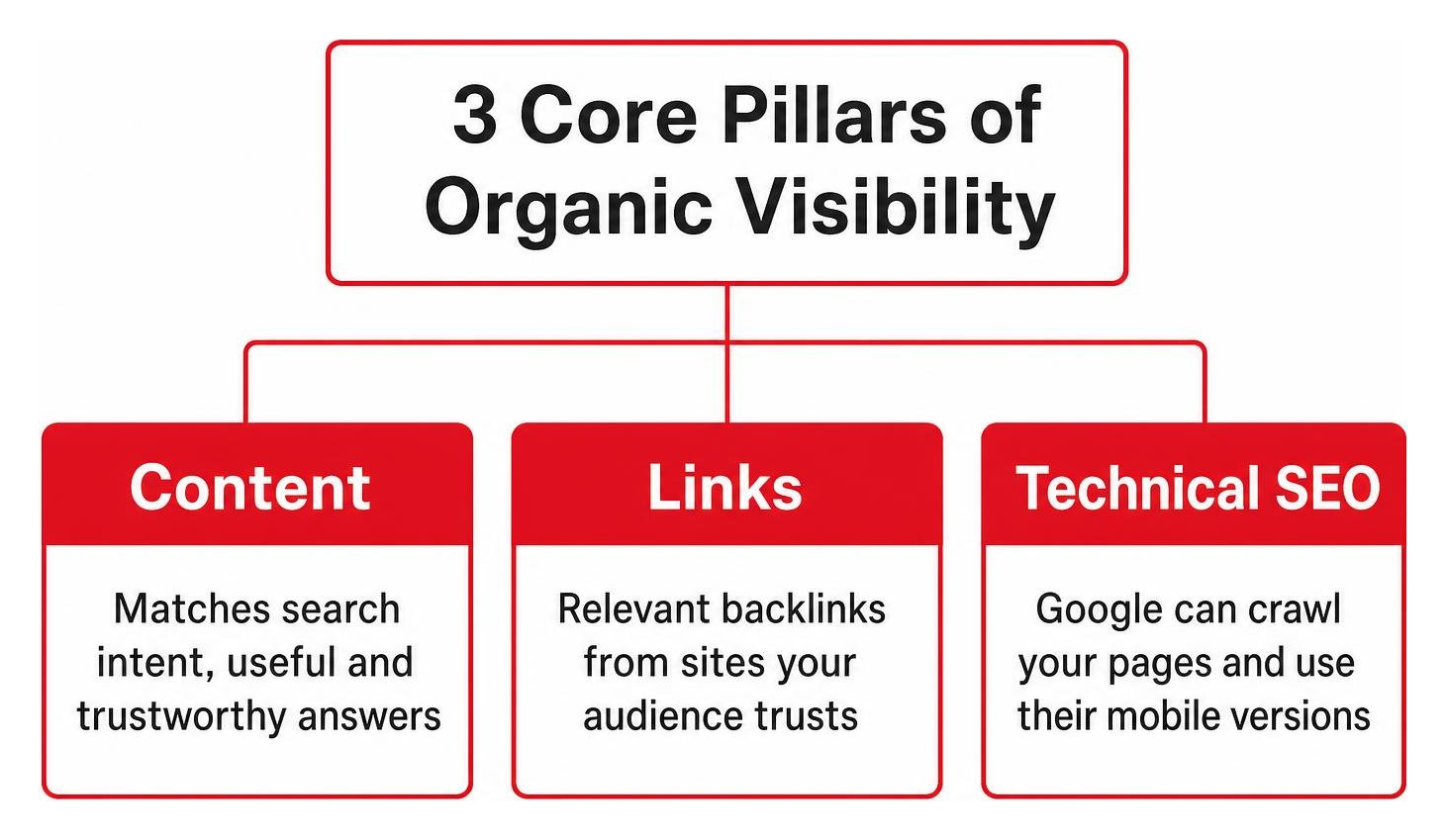
The most important Google ranking factors in 2026 are content that matches search intent, useful and trustworthy answers, and relevant backlinks. Google must also be able to crawl your pages and use their mobile versions. No single factor has the same weight for every search query, as modern algorithmic systems continuously balance domain authority, technical infrastructure, and semantic depth based on specific user needs.

Image metadata: Inline image; photorealistic; mobile search and site performance; 2026.
Start by auditing pages that fail to answer a searcher’s question thoroughly. From there, make your website easier to navigate and earn links from sites your audience trusts. At SocialSellinator, I’m Jock Breitwieser, and I’ll help you sort high-impact priorities from fleeting SEO myths.
Most important google ranking factors terms simplified:
Introduction
Search engines have evolved from basic keyword-matching directories into sophisticated neural networks capable of understanding human nuance. Today, more than 8.5 billion searches take place every single day, with Google capturing over 79% of the worldwide search engine market share. To organize this unfathomable volume of information, Google’s automated ranking systems process hundreds of billions of indexed webpages across the global web, returning the most helpful, context-rich answers in a tiny fraction of a second.
While search engineers utilize over 200 distinct signals within their complex algorithms, website owners, founders, and marketing teams frequently find themselves overwhelmed by technical jargon and conflicting optimization advice. The underlying truth is straightforward: search algorithms exist entirely to serve human searchers. When you strip away the noise and superficial speculation, enduring success in organic search comes down to delivering immediate value, establishing unquestioned topical credibility, and providing a clean, accessible digital platform.
Understanding which signals carry the heaviest weight allows growing businesses to allocate their marketing budget and resources effectively. Instead of chasing every fleeting trend or minor algorithmic tweak, focusing on the foundational elements of search visibility ensures sustainable organic growth, robust lead generation, and compounding authority over the long run. Modern businesses that align their digital strategy with authentic user satisfaction create resilient digital assets that withstand algorithmic turbulence and generate high-intent pipeline month after month.
The Most Important Google Ranking Factors in 2026: An Overview
In modern search retrieval, Google does not apply a rigid, static formula across every search query. An industry survey reveals that 66.3% of search specialists recognize that ranking factor weights fluctuate significantly depending on the nature, vertical, and specific context of the query. For example, a search for breaking news relies heavily on freshness and timeliness systems, whereas a query concerning financial planning, legal services, or medical advice demands rigorous authority, verifiable accuracy, and comprehensive trust signals.
When exploring the core elements of search algorithms, businesses often begin by cracking the Google top 10 SEO ranking factors code to separate essential foundational elements from minor algorithmic noise. Search engines evaluate the overall relevance of a webpage alongside the authority of the publishing domain, ensuring that users receive both accurate and comprehensive information that directly resolves their challenges.
Understanding Search Intent and Semantic Content Relevance
At the very top of the ranking hierarchy sits search intent matching and semantic relevance. Industry research highlights content relevance as the single most impactful factor in modern organic search, earning top ratings from optimization professionals worldwide. Google’s sophisticated language systems improve search results across more than 30% of global queries by interpreting synonyms, conversational phrasing, and semantic context rather than relying on exact word strings.
Search intent generally falls into four primary buckets:
- Informational Intent: The searcher wants to learn something new, solve a specific operational challenge, or understand a complex technical concept.
- Navigational Intent: The user is attempting to reach a specific brand, portal, client login screen, or designated website destination.
- Commercial Investigation: The searcher is comparing solutions, reading reviews, evaluating case studies, or vetting service providers before committing to a final purchase decision.
- Transactional Intent: The user is prepared to complete an action immediately, such as requesting a proposal, scheduling a consultation, downloading an enterprise asset, or purchasing a product.
Modern search engines evaluate whether your content satisfies the underlying goal of the searcher from beginning to end. A comprehensive page that covers a topic thoroughly, addresses related subtopics, and provides actionable answers will naturally outperform a thin page stuffed with repetitive keywords. Semantic content depth means answering the visitor’s next logical question before they even have to return to the search results to ask it. By structuring your articles around clear topic clusters, supporting subheadings, and detailed explanations, your website signals comprehensive subject mastery to search engine algorithms and establishes your brand as a definitive industry resource.
The Enduring Power of High-Quality Backlinks and Domain Authority
Despite continuous advancements in artificial intelligence and natural language processing, external hyperlinks remain a foundational pillar of web ranking. Links function as independent votes of confidence from one website to another. A large-scale analysis of 11.8 million search results demonstrated that the number of unique referring domains pointing to a site correlates more strongly with top organic rankings than almost any other single off-page metric.
However, the modern link ecosystem is governed strictly by quality and topical alignment over sheer quantity. A single editorial link from an established, topically relevant industry publication provides far greater value than hundreds of automated directory links or low-tier blog comments. Building a resilient online presence requires executing comprehensive off-page SEO strategies that focus on earning high-authority editorial mentions, establishing digital PR connections, participating in thought leadership, and cultivating genuine industry relationships that build lasting domain trust and durable organic equity across competitive verticals.
Core Pillars of Search Algorithm Performance: Content, Links, and Tech
To systematically optimize a website, it is helpful to categorize search signals into three structural pillars: On-Page Content, Off-Page Authority, and Technical Infrastructure. Search engines rely on a seamless balance among all three disciplines to evaluate, index, and position web pages, a process documented extensively in Google’s own search ranking guidance for publishers and site owners.
| SEO Pillar | Primary Ranking Signals | Business Impact & Algorithmic Role |
|---|---|---|
| On-Page Content | Search intent alignment, semantic depth, E-E-A-T signals, entity coverage | Directly satisfies user queries and establishes topical relevance for target search terms. |
| Off-Page Authority | High-quality referring domains, brand search volume, natural anchor text | Demonstrates trustworthiness, industry credibility, and third-party validation. |
| Technical SEO | Mobile-first indexing, Core Web Vitals, site architecture, HTTPS security | Ensures search bots can seamlessly crawl, parse, and render digital content without friction. |
A useful model often discussed among search specialists is the ABC framework:
- Anchors: The anchor text and contextual framing of internal and external links that point to a page, signaling its topical focus and thematic relationship to adjacent resources.
- Body: The comprehensive copy, structured data, multimedia, and headings that answer user intent directly within the webpage itself.
- Clicks: The aggregated user engagement and satisfaction patterns that indicate whether visitors found the content helpful, trustworthy, and actionable.
Mastering these pillars starts with understanding how search engines crawl, index, and rank content across the broader web ecosystem. Businesses that invest in digital marketing and SEO services often find that aligning internal teams around these three pillars simplifies prioritization and prevents wasted effort on low-impact tactics.
Core Signals: Identifying the Most Important Google Ranking Factors for Content
Quality content is not defined by superficial word count, but by substance, clarity, and authority. Industry benchmark studies show that the average first-page search result contains approximately 1,400 to 1,450 words, reflecting the depth required to answer nuanced questions comprehensively.
To maximize the performance of your written assets, implementing proven on-page SEO optimization tactics is essential. These tactics include:
- Demonstrating E-E-A-T: Showcasing real-world Experience, deep Expertise, recognized Authoritativeness, and transparent Trustworthiness. Adding clear author bios, citations, case studies, and transparent business credentials signals credibility to both search engines and users.
- Original Research and First-Party Data: Publishing unique surveys, proprietary data, and original experiments attracts natural industry citations and establishes your domain as an authoritative source.
- Semantic Entity Optimization: Incorporating contextually related terms, synonyms, and subtopics naturally throughout the copy to help machine learning models grasp the full scope of your subject matter.
- Structured Formatting: Using clear heading hierarchies (H1, H2, H3), concise bullet points, and scannable summaries to improve readability, accessibility, and retention across all devices.
Teams that combine these on-page tactics with a broader digital marketing strategy, including SEO and PPC efforts working in tandem, tend to see faster compounding returns than those relying on content alone.
Technical and Off-Page Pillars Among the Most Important Google Ranking Factors
A brilliant piece of content cannot rank if search engine crawlers encounter technical barriers or if users abandon the page due to poor performance. Modern search systems evaluate technical health as a foundational requirement for competitive rankings.
First, page experience and performance are critical. Fast loading times prevent user frustration and reduce abandonment rates. Prioritizing site speed optimization ensures your digital assets meet Core Web Vitals thresholds, which evaluate visual stability, loading speed, and interactive responsiveness.
Second, site architecture plays a crucial role in distributing link authority and helping search bots discover new pages. Implementing strategic internal linking and site structure establishes logical content hierarchies, groups related articles into topical clusters, and ensures that vital conversion pages receive adequate internal PageRank.
Finally, fundamental technical hygiene remains non-negotiable:
- Mobile-First Responsiveness: Google indexes and evaluates the mobile version of your website as the primary baseline.
- HTTPS Protocol: Securing your website with an SSL certificate protects user data and satisfies basic browser security standards.
- Clean Crawl Paths: Maintaining XML sitemaps, managing robots.txt directives, and eliminating broken links ensures efficient indexation.
User Experience Signals, Core Web Vitals, and AI Architecture
Modern search algorithms incorporate machine learning and artificial intelligence systems to understand natural language nuances and user interaction trends. Advanced AI systems interpret complex, conversational search queries and map them to the most relevant online content.
These AI models look beyond exact keyword phrasing to understand the broader context of search queries. For instance, if a user searches for advice on how to adjust screen settings on a specific device, the algorithm understands synonymous terms like “modify brightness” or “display configuration” without requiring exact keyword repetition. Furthermore, search engines monitor aggregate, anonymized user experience signals to assess whether a page successfully resolved the searcher’s query. Signals such as dwell time, click-through rates (CTR), and low rates of pogo-sticking serve as strong indicators of page quality and satisfaction. Businesses that track these engagement metrics alongside traditional conversion data gain a clearer picture of how their content actually performs once a visitor arrives from search results.
Debunking Common SEO Misconceptions and Tracking the Evolution Since 2009
The world of search engine optimization has changed dramatically over the past two decades. In the late 2000s, search algorithms relied heavily on raw keyword repetition, exact-match domain names, and the sheer volume of inbound links regardless of origin. Marketers could easily manipulate rankings using exact-match anchor text, hidden keyword text, and automated link directory submissions.
Today, those outdated practices do far more harm than good. Savvy businesses stay ahead by debunking common search myths and focusing on sustainable, value-driven marketing strategies that align with modern search engineering principles.
Algorithm Shifts from 2009 to 2026
The shift from mechanical keyword matching to semantic comprehension represents the biggest milestone in search history. Historical industry tracking highlights several key transitions:
- From Link Quantity to Link Quality: Early algorithms treated all hyperlinks similarly. Today, links from spammy or unrelated domains are filtered out, while authoritative, context-rich editorial links hold tremendous value.
- From Keyword Density to Topical Entities: Modern search models evaluate concepts, entities, and relationships rather than calculating the percentage of times a specific keyword appears in the body text.
- From Desktop-Centric to Mobile-First: Mobile usability transitioned from an afterthought into the primary indexation baseline for all web properties.
- From Static Scoring to Query-Specific Weighting: Algorithms dynamically adjust ranking factors based on whether a searcher requires breaking news, local proximity, technical research, or immediate purchasing options.
Common Myths: Domain Age, Exact Match Keywords, and Duplicate Content
Misconceptions continue to circulate across digital marketing forums, often leading businesses to invest time and budget into ineffective tactics. Let us examine three of the most persistent myths:
- Myth 1: Domain Age Alone Guarantees High Rankings. Search engine representatives have repeatedly clarified that an older domain does not inherently receive algorithmic favoritism. What truly matters is a domain’s historical track record of publishing helpful content, maintaining clean technical standards, and accumulating authentic backlink equity over time.
- Myth 2: Exact Match Domains Automatically Dominate Search Results. Registering a domain name composed entirely of target keywords no longer provides an unfair ranking shortcut. Specialized algorithmic systems prevent exact-match domains from outranking superior brands simply due to their URL naming convention.
- Myth 3: Duplicate Content Triggers an Automatic Algorithm Penalty. Duplicate content is rarely a punitive issue unless it involves deliberate, malicious scraping. In most cases, having identical text across multiple URLs simply forces search engines to choose one canonical version to display, which can dilute crawl equity and split inbound link value across multiple pages.
Frequently Asked Questions About Google Ranking Factors
What are the top three Google ranking signals?
The top three signals that consistently govern search engine visibility are search intent alignment and content relevance, high-quality backlinks from authoritative referring domains, and demonstrated E-E-A-T (Experience, Expertise, Authoritativeness, and Trustworthiness). A website that pairs deep, intent-driven answers with strong third-party credibility and transparent author expertise will reliably earn competitive placements across organic search result pages.
Does Google penalize websites for duplicate content?
Google does not maintain a formal “duplicate content penalty” that demotes an entire website. However, duplicate content creates internal competition, wastes crawl budget, and dilutes link authority across duplicate URLs. To resolve duplicate content issues, webmasters should implement self-referential or cross-domain rel="canonical" tags, set up 301 redirects, or apply noindex directives to secondary variations of identical pages.
How do AI algorithms like RankBrain, BERT, and MUM influence rankings?
AI models allow search engines to understand intent, semantic context, and nuanced relationships between concepts in human language. RankBrain helps process novel and conversational queries, BERT deciphers the contextual meaning of words based on surrounding text, and MUM analyzes complex information across multiple formats and languages simultaneously. These systems ensure that pages answering user queries thoroughly are rewarded, even if the exact keyword phrasing is not present in the copy.
Conclusion: Mastering Search Visibility in 2026
Achieving consistent visibility on major search engines is an ongoing journey that requires technical rigor, insightful content creation, and active authority building. By implementing simple steps to improve your website ranking on Google today—such as auditing underperforming content, optimizing title tags, accelerating mobile page speed, and acquiring quality editorial backlinks—you can systematically increase your organic search footprint and drive qualified inbound opportunities.
Navigating the nuances of modern digital visibility requires a clear, data-driven approach. Businesses looking to scale their customer acquisition, expand brand awareness, and capture high-intent search traffic benefit immensely from partnering with SocialSellinator for expert SEO services. Whether your organization needs comprehensive digital marketing, strategic pay-per-click management, engaging social media campaigns, or conversion-focused search engine optimization, a tailored strategy ensures your marketing budget delivers measurable return on investment.
Headquartered in San Jose, in the heart of Silicon Valley and the San Francisco Bay Area, SocialSellinator proudly provides top-tier digital marketing, SEO, PPC, social media management, and content creation services to B2B and B2C SMB companies. While serving businesses across the U.S., SocialSellinator specializes in supporting clients in key cities, including Austin, Boston, Charlotte, Chicago, Dallas, Denver, Kansas City, Los Angeles, New York, Portland, San Diego, San Francisco, and Washington, D.C.