

How to Build a Healthy Brand Community Without the Headache
Why Healthcare Brand Community Tips Are the Growth Strategy You Can’t Ignore
The best healthcare brand community tips aren’t about posting more content — they’re about building real relationships that keep patients loyal, engaged, and referring others.
Here’s a quick look at the most impactful strategies:
- Define your brand identity and voice — go beyond clinical services to a mission patients can connect with
- Choose the right platforms — focus on one or two channels where your specific patient community already spends time
- Create connection-first content — patient stories, empathy posts, and educational series beat promotional content every time
- Engage consistently — respond within 24 hours, ask questions, and build private groups for deeper member connection
- Stay HIPAA-compliant — never share identifiable patient information without explicit written consent
- Track the right metrics — measure engagement rate, save rate, and social-to-appointment attribution, not just follower count
- Integrate online and offline — connect digital community efforts with local events, sponsorships, and in-person outreach
Most healthcare brands treat social media like a broadcast tower. They push announcements, share generic health tips, and wonder why engagement stays flat. The practices quietly growing their patient base are doing something different — they’re building communities, not audiences.
The difference matters more than most realize. Patients who feel part of a healthcare community are 4x more likely to refer friends and family and 67% more likely to stay loyal through staff changes or insurance disruptions. And since acquiring a new patient costs 5 to 25 times more than retaining an existing one, a loyal community isn’t just a feel-good goal — it’s your most efficient growth investment.
I’m Jock Breitwieser, and in this guide I’ll walk you through exactly how to build that community without the overwhelm.
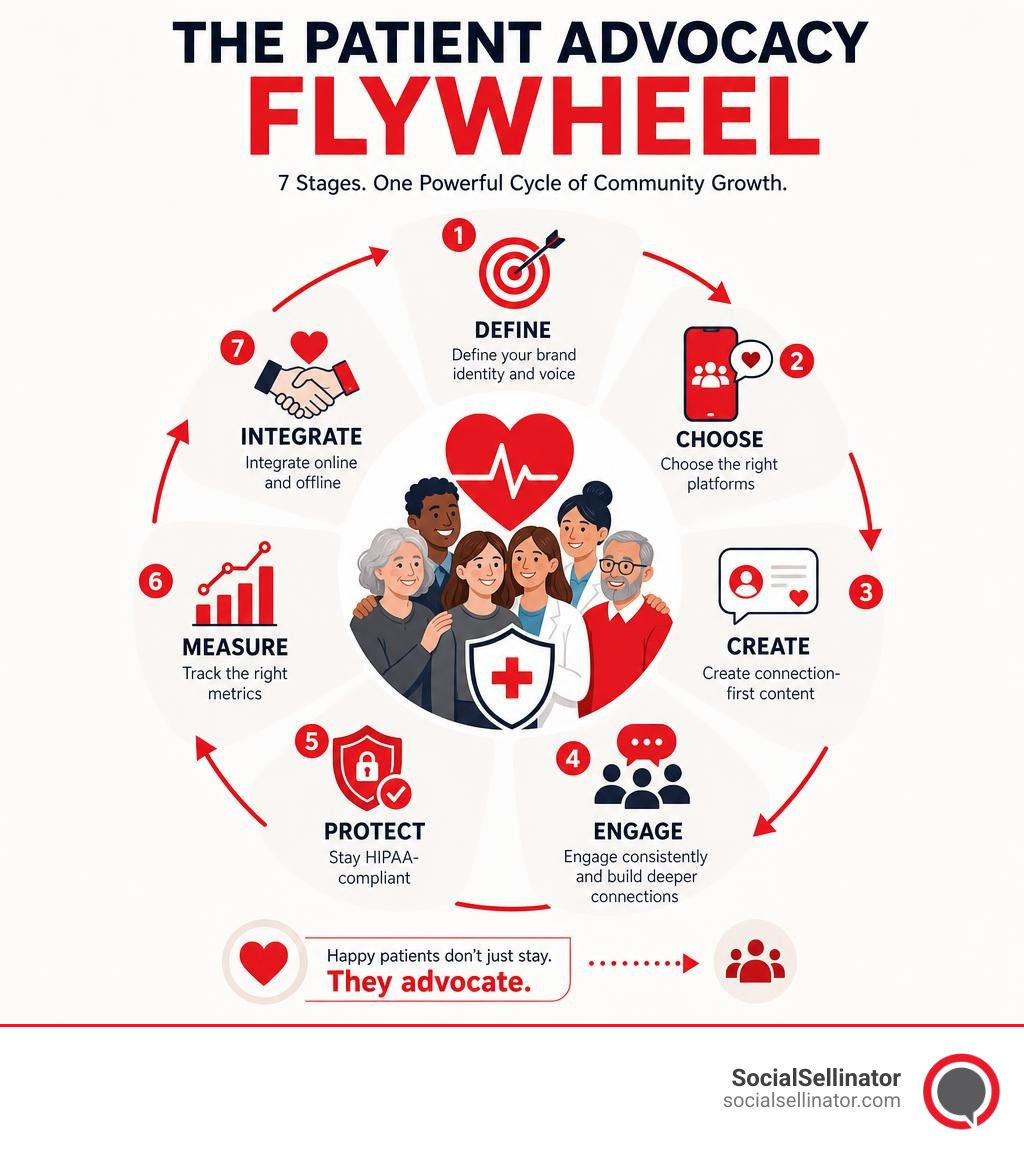
Simple healthcare brand community tips word guide:
Passive Audience vs. Engaged Community: Why It Matters for Patient Loyalty
To understand why some medical practices thrive while others struggle to keep their schedules filled, we have to look closely at how they view their online following. There is a massive, highly consequential difference between a passive audience and an engaged healthcare community.
A passive audience is a group of spectators. They might follow your page because they liked a medical meme three years ago, or because they needed to check your office hours once. They consume your content silently, if they see it at all, and feel zero emotional attachment to your brand. When a competitor down the street offers a cheaper cleaning or joins their new insurance network, these followers disappear without a second thought.
An engaged community, on the other hand, is an active social unit. These are patients, caregivers, and local advocates who talk to you—and, crucially, to each other. They share their recovery milestones, validate each other’s health anxieties, and actively participate in the educational conversations you host. They don’t just view you as a clinical utility; they view you as a trusted partner in their ongoing wellness journey.
This distinction is the ultimate driver of patient retention and lifetime value. When patients feel like they belong to a community, their relationship with your practice transcends the transactional. They remain loyal even through administrative hiccups, staff changes, or insurance plan disruptions.
Let’s break down how these two groups compare across critical performance indicators:
| Metric / Dimension | Passive Audience | Engaged Community |
|---|---|---|
| Primary Activity | Unidirectional consumption (reading posts) | Multidirectional dialogue (commenting, sharing, discussing) |
| Retention Driver | Purely transactional (price, location, convenience) | Emotional connection (trust, belonging, shared values) |
| Referral Behavior | Rare; only when directly asked for a recommendation | Proactive; enthusiastically sharing stories with loved ones |
| Response to Friction | Swift defection to competing practices | High tolerance, patience, and direct constructive feedback |
| Lifetime Value | Low to moderate; highly volatile | High; consistent long-term scheduling and engagement |
Building this level of connection requires a deliberate shift in how you manage your online channels. If you want to dive deeper into how digital interactions translate into long-term patient retention, explore our detailed guide on social media brand loyalty.
Defining Your Healthcare Brand Identity and Voice
If your brand community is a virtual coffee shop, your brand voice is the personality of the host. Before patients open up, you must define who you are, what you stand for, and how you speak.
In healthcare, this starts with identifying your “mission beyond medicine.” Why does your practice exist beyond clinical services? Perhaps your mission is to take the fear out of pediatric dentistry, or to make complex oncology treatments feel deeply human. Leading with this larger purpose gives people a meaningful cause to rally around.
This mission must be delivered through a consistent, empathetic brand voice. Patients do not want to be lectured by a cold, faceless institution using dense medical jargon. They want to hear from real, compassionate humans who understand their concerns.
Your communication should always prioritize the patient’s perspective. Frame your expertise around their lived experiences, fears, and health aspirations. Instead of posting a clinical announcement like, “We have updated our scheduling software to improve administrative throughput,” frame it empathetically: “We know your time is valuable, so we’ve upgraded our booking system to make scheduling your next visit faster and easier.”
To craft a narrative that resonates deeply with your target demographic, check out our insights on brand storytelling on social media.
Finding Your Unique Healthcare Brand Community Tips
To translate your brand identity into daily practice, define your community avatar—a single, ideal member of your group. Ask yourself:
- What are their primary health goals and daily challenges?
- What specific anxieties keep them awake at night regarding their care?
- What kind of tone makes them feel safest and most understood?
Once you have defined this avatar, balance your tone of voice between two essential pillars: clinical excellence and emotional warmth. Clinical excellence builds necessary cognitive trust. It proves that your team is highly trained, precise, and safe. You demonstrate this through clear, evidence-based explanations. Emotional warmth builds affective trust. It proves that you care about the human in the waiting room. You demonstrate warmth through authentic photography of your staff, personal stories of triumph, and compassionate, conversational language. A healthy community requires both; too much clinical coldness alienates patients, while too much casual warmth without clinical backing can undermine your authority.
Choosing the Right Platforms and Content Strategies for Your Specialty
A common mistake in digital marketing is trying to be everywhere at once. It is far better to cultivate a vibrant, deeply engaged community on one or two platforms than to spread your resources thin.
Platform selection must be guided by where your community avatar naturally spends their time:
- Facebook remains a powerhouse for local, family-oriented demographics, making it ideal for private support groups.
- Instagram is perfect for visual storytelling and engaging younger patients (ages 18–45) through Reels and Stories.
- LinkedIn is the standard for professional B2B healthcare and healthtech communities.
- TikTok offers reach for quick, engaging video content, particularly for pediatric and wellness specialties.
- YouTube serves as the home for in-depth educational series and patient testimonials.
Aligning your chosen platform with a structured, diverse content mix is the key to maintaining long-term interest. To learn how to build a balanced, sustainable posting schedule, consult our social media content creation guide.
Platform Selection Based on Medical Specialty
Your specific medical field should dictate your platform focus. Pediatric practices thrive on Facebook and Instagram because parents look there for developmental milestones. Dental practices benefit from visual platforms like Instagram and TikTok, where friendly hygienist introductions can ease dental anxiety. Because dental marketing operates under distinct regulatory expectations, we highly recommend reading the professionals guide to dental practice social media and policies to ensure your campaigns stay compliant.
Oncology and chronic disease specialties require a sensitive, high-empathy approach. For these fields, use public profiles to share high-level hope and clinical breakthroughs, while directing patients to secure, private, moderated support groups where they can safely share their personal struggles.
Content Types That Drive Deep Patient Connections
To foster genuine relationships, focus your content strategy on four highly effective categories:
- Behind-the-scenes content: Introduce the humans behind the stethoscopes. Share photos of your staff to humanize your brand and break down clinical barriers.
- User-generated content (UGC): Encourage patients to share their own health journeys. With explicit, written consent, celebrate a patient’s recovery milestone.
- Myth-busting and educational series: Address common health misconceptions directly. Create a recurring series where your clinicians gently debunk popular internet health trends with peer-reviewed facts.
- Video content: Short-form video is highly engaging. A 30-second Reel of a pediatrician showing how they make toddlers laugh during an exam builds immense trust.
By combining these formats, you establish a reliable, multi-dimensional presence. For a comprehensive look at how to synthesize these elements into a cohesive strategy, explore our guide on building a strong online presence with social media marketing.
Actionable Healthcare Brand Community Tips to Drive Engagement
Building a community is not a passive endeavor. To transform a quiet following into an active, supportive ecosystem, you must implement deliberate, daily engagement strategies.
First, establish a strict 24-hour response rule. When a patient leaves a comment or sends a direct message, they are taking a step toward connection. Prompt, personalized responses show that your practice is listening and values their input.
Second, leverage private Facebook groups or secure patient forums. Public social media pages can feel too exposed for patients dealing with personal health matters. A private, moderated group provides a safe haven where members can ask questions, share vulnerable experiences, and offer mutual encouragement.
Third, host regular interactive Q&A sessions. Use features like Instagram’s “Questions” sticker or host a live stream where a specialist answers general wellness queries in real time. This positions your clinicians as accessible, trusted resources while driving engagement.
To master the art of digital conversation and keep your followers coming back, review our best practices for engaging customers on social media.
Transforming Passive Followers into Active Advocates
To keep the momentum going, activate the psychological principle of reciprocity. When you consistently provide free, high-value health education, compassionate support, and genuine attention, your community members naturally want to give back by defending your practice online, sharing your content, and writing glowing reviews.
Consider implementing a structured “member spotlight” program. With full consent, highlight a community member who has made incredible strides in their personal wellness. This shifts the spotlight from your business to your people, showing that you value them as individuals.
To maintain a safe, welcoming environment, publish clear, easy-to-read community guidelines. Explicitly state that respect, empathy, and privacy are non-negotiable, and that medical advice from non-clinicians will be removed to protect member safety. Finally, create active feedback loops by regularly asking your community what topics they want to learn about next.
Overcoming Barriers: Compliance, Time Constraints, and Low Engagement
Many healthcare marketers hesitate to build communities because of operational hurdles. Let’s address the three most common barriers head-on: compliance, time, and slow initial growth.
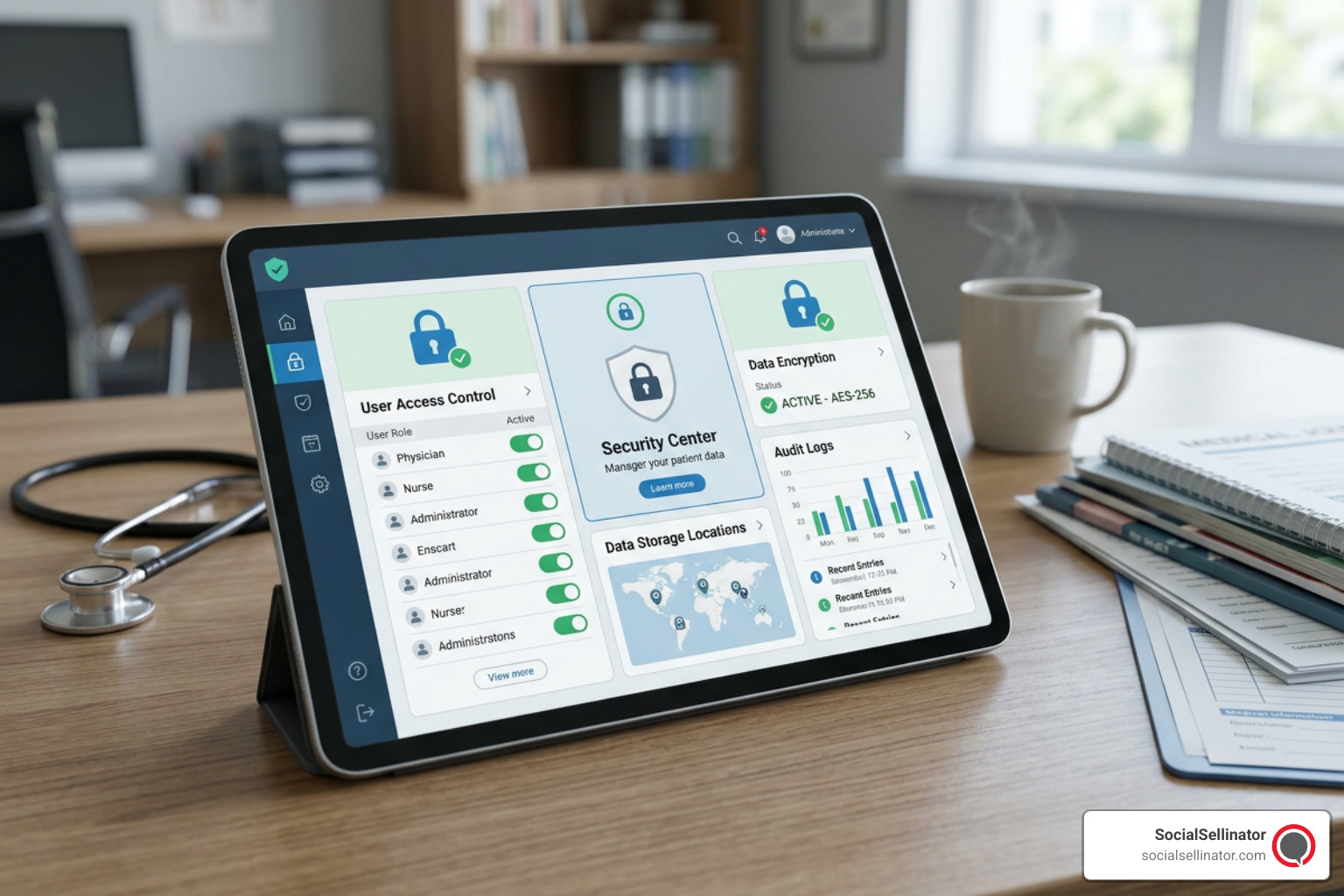
The primary concern is always HIPAA compliance and patient privacy. The golden rule is simple: never share any information that could identify a specific patient without explicit, written, and legally binding consent.
Even when a patient leaves a public comment sharing their medical history, your response must remain general and educational. For example, if a patient comments, “The medication you prescribed for my eczema is causing a rash, what should I do?” your public response should never confirm their patient status. Instead, respond: “We always recommend contacting your prescribing doctor directly to discuss any new symptoms. Generally, when patients experience unexpected skin changes, our team advises stopping the product and scheduling an evaluation.”
To navigate these complex legal waters safely across all your social channels, keep our healthcare social media cheat sheet bookmarked.
The second barrier is time constraints. Managing a community can feel like a full-time job, but the solution is structured content batching. Instead of trying to think of what to post every morning, dedicate just two hours once a month to outline your content calendar, write captions, and record short video clips with your clinical staff. Use scheduling tools to automate publication, leaving your daily tasks limited to just 10–15 minutes of moderation.
Finally, do not be discouraged by slow growth. A small, highly active community of 100 local patients is infinitely more valuable to your practice than a passive audience of 10,000 random global followers. Focus on the depth of your connections rather than the breadth.
Measuring Community Health Beyond Vanity Metrics
If you are still measuring your social media success solely by your follower count, you are missing the forest for the trees. Follower count is a vanity metric; it tells you nothing about whether those people trust you, visit your clinic, or recommend you to their families.
To understand the true health and financial impact of your community, you must track deep engagement metrics:
- Engagement rate: Calculate the percentage of your followers who actively interact (like, comment, share) with your content. A healthy target is above 3% on highly visual platforms like Instagram and above 1.5% on Facebook.
- Save rate: This is one of the most critical indicators of value. When a user “saves” your post, they are signaling that your educational content is so valuable that they want to return to it later. Aim for a save rate above 1.5% of your total impressions.
- Share rate: When a member shares your post to their personal feed or direct messages a friend, they are acting as an organic brand advocate. High share rates indicate that your content is highly relatable and universally helpful.
- Social-to-appointment attribution: Use customized landing pages, unique booking links in your bio, or simple intake forms that ask, “How did you hear about us?” to track exactly how many digital community members transition into active, paying patients.
- Community-Qualified Leads (CQLs): In B2B healthcare and healthtech, track how many highly engaged community members (e.g., those who regularly attend webinars or participate in professional forums) transition into your sales pipeline.
By focusing on these actionable metrics, you can clearly demonstrate the return on your marketing investment. To learn more about optimizing your digital tracking and maximizing your local visibility, read about enhancing brand awareness through social media management.
Integrating Digital Communities with Local Marketing and B2B Strategies
A successful community marketing strategy does not live entirely online. The most powerful healthcare brands seamlessly bridge the gap between digital interaction and local, physical presence.
Healthcare is inherently local. People want to receive care from providers who are active, visible members of their neighborhoods. You can build this physical trust by:
- Sponsoring and participating in local events, such as charity runs or health fairs.
- Hosting free, in-person educational workshops or wellness screenings at local community centers.
- Designing hybrid events, such as a live-streamed medical seminar where local residents can attend in person while remote patients participate via live chat.
To amplify these physical efforts and ensure your local community can easily find you online, consider backing your organic strategy with targeted local advertising. Learn how to structure these campaigns effectively in our guide on Facebook ads for healthcare.
B2B Healthcare Brand Community Tips for Professional Networks
If you operate a B2B healthcare or healthtech brand, your community-building efforts must pivot toward professional networks, specifically targeting healthcare providers (HCPs), clinical administrators, and executives.
B2B buyers seek peer validation, clinical evidence, and collaborative problem-solving. LinkedIn is the premier platform for this audience. Use it to share peer-reviewed studies, industry insights, and behind-the-scenes looks at your technology.
To build a thriving B2B community:
- Host consistent, high-value webinars: Host an educational panel featuring respected industry experts discussing pressing challenges, such as reducing clinician burnout.
- Create role-specific virtual roundtables: Invite small, exclusive groups of Chief Nursing Officers (CNOs) or Chief Medical Officers (CMOs) to private digital forums where they can discuss shared operational struggles.
- Leverage professional insights: Provide them with robust, gated resource libraries and peer-to-peer discussion hubs to facilitate self-guided research.
- Promote user-generated professional content: Showcase how current medical systems use your healthtech solutions to improve patient outcomes, using real quotes and data-driven case studies from active clinicians.
Frequently Asked Questions About Healthcare Brand Communities
How can a healthcare brand remain HIPAA-compliant while building an online community?
To remain HIPAA-compliant, never share any protected health information (PHI) or details that could identify a patient without explicit, written consent. Keep all public interactions strictly educational, general, and focused on wellness. When patients share personal details in comments, gently guide them to secure, private communication channels like your patient portal or a direct phone line.
What are the best metrics to track the ROI of a healthcare community?
The best metrics to track the ROI of your community are patient retention rates, organic referral rates, social-to-appointment attribution, and Community-Qualified Leads (CQLs). By monitoring how many highly engaged community members schedule appointments or refer loved ones, you can directly connect your digital community efforts to your practice’s bottom-line growth.
How do you handle negative comments or medical misinformation in your community?
First, establish and publish clear community guidelines that outline acceptable behavior. Automatically filter out spam and profanity using platform moderation tools. Address legitimate negative patient feedback promptly, professionally, and non-defensively, offering to resolve the issue privately. For medical misinformation, gently provide peer-reviewed, accurate facts from your clinical team, or remove the post if it poses a safety risk to other members.
Conclusion
Building a healthy brand community takes time, consistency, and a deep commitment to putting patients first. But when done right, it transforms your medical practice or B2B healthcare brand from a simple utility into a trusted, irreplaceable partner in your community’s wellness journey.
You don’t have to navigate this complex process alone. Whether you need to optimize your search engine visibility, launch targeted ad campaigns, or build a thriving online community from scratch, professional support can make all the difference. To explore how tailored digital strategies can drive real results for your practice, learn more about our San Jose social media management services.
Headquartered in San Jose, in the heart of Silicon Valley and the San Francisco Bay Area, SocialSellinator proudly provides top-tier digital marketing, SEO, PPC, social media management, and content creation services to B2B and B2C SMB companies. While serving businesses across the U.S., SocialSellinator specializes in supporting clients in key cities, including Austin, Boston, Charlotte, Chicago, Dallas, Denver, Kansas City, Los Angeles, New York, Portland, San Diego, San Francisco, and Washington, D.C.