
How to Turn Your Brand Community into a Raving Fanbase in 2026
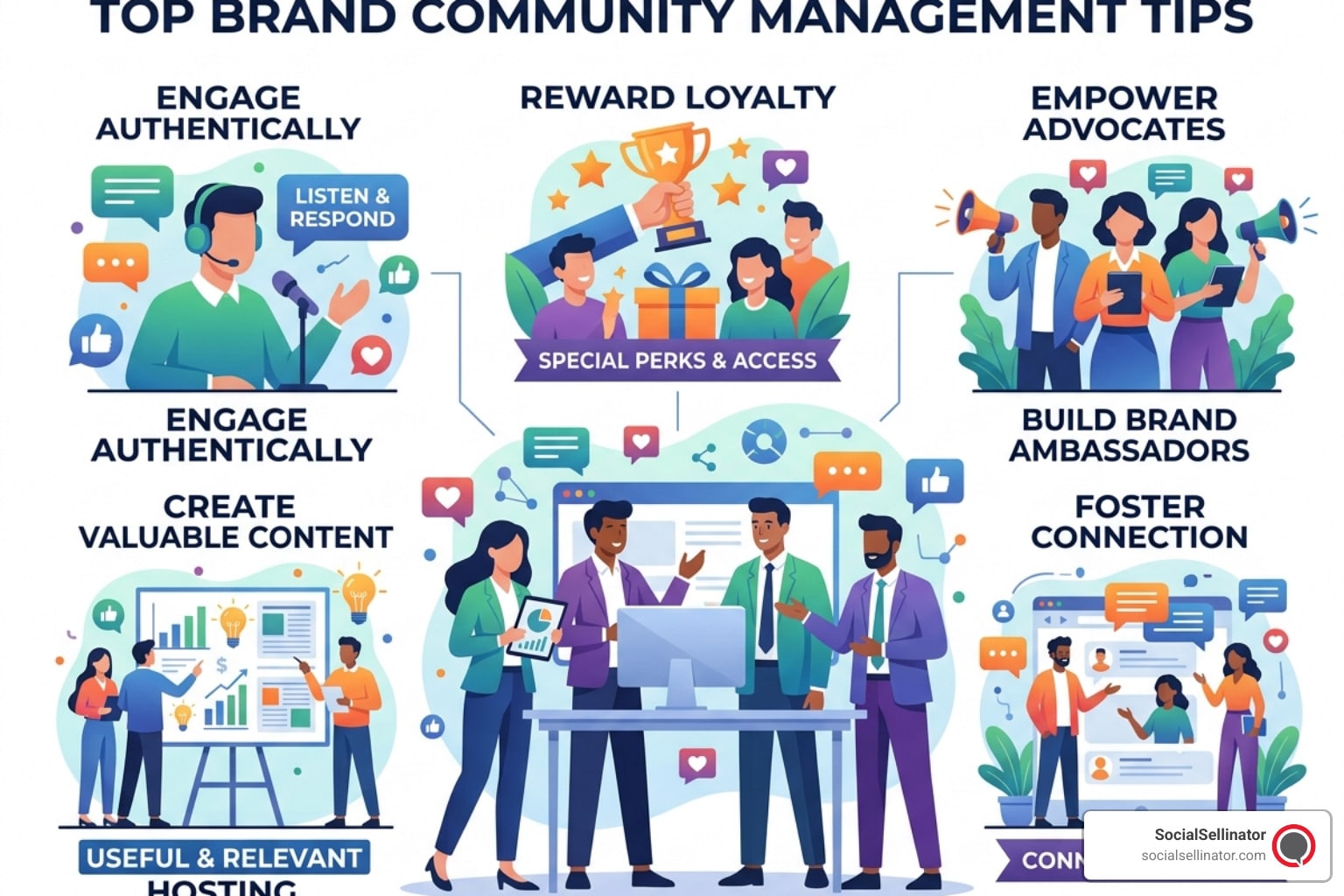
Brand community management tips in 2026 require defining a clear community purpose, tracking health-centric KPIs like Active Member Rate, leveraging user-generated content as a primary asset, balancing AI automation with human empathy, and fostering member-to-member connections. According to industry research, 86% of marketers say building an active community is crucial to long-term success, and 52% of Gen Z trusts social media for brand information over traditional search engines.
Key Takeaways
- 86% of marketers report that building an active brand community is crucial to long-term success in 2026, making community management a core business strategy rather than a marketing tactic.
- 52% of Gen Z consumers trust social media for brand information more than traditional search engines, positioning brand communities as a primary discovery channel.
- The SPACES model—Support, Product, Acquisition, Contribution, Engagement, Success—provides a proven framework for aligning community activities with business objectives across B2B and B2C brands.
- User-generated content (UGC) generates significantly higher trust and engagement than professional, high-budget content, with raw and authentic customer content outperforming polished brand material in 2026.
- A hybrid AI-plus-human approach to community management delivers the best results: AI handles spam filtering, FAQ responses, and data analysis while humans manage emotional connections and crisis resolution.
Table of Contents
- Why Brand Community Management Tips Matter More Than Ever in 2026
- How Do You Define Your Community’s Purpose with Precision?
- Setting Measurable Goals and Health-Centric KPIs
- How Can You Know Your Audience Through Deep Behavioral Analysis?
- Engaging Consistently and with Radical Empathy
- Why Is User-Generated Content Your Primary Asset?
- Moderating with a Proactive Stewardship Plan
- Using Social Listening Tools to Stay Ahead of the Curve
- How Do You Foster Member-to-Member Connections Intentionally?
- Balancing AI Efficiency with Human Empathy
- Measuring Community Health Through Advocacy and Longevity
- What Is Social Media Community Management in 2026?
- Community Manager vs. Social Media Manager: Understanding the Nuance
- How Does the SPACES Model Drive Strategic Community Growth?
- Identifying and Segmenting Your Audience
- Platform Selection: Where Does Your Community Live?
- Nurturing Engagement and Rewarding Loyalty
- How Do You Handle Crisis Management and Moderation Workflows?
- Building a 90-Day Community Roadmap for SMBs
- FAQs
- Related Articles
Why Brand Community Management Tips Matter More Than Ever in 2026
Brand community management tips are the playbook every marketer needs to navigate the increasingly complex digital landscape of 2026. Digital noise has reached an all-time high and consumer skepticism toward traditional advertising is at a peak. Fostering a genuine sense of belonging is no longer a luxury—it is a survival mechanism.
The shift from broadcasting to facilitation is the hallmark of enduring brands. Consumers do not just want to buy from a brand; they want to belong to what that brand represents. SocialSellinator specializes in building digital ecosystems that thrive on mutual value, ensuring a brand is not just a logo but a living, breathing hub of interaction.
To succeed in this environment, brands must understand that community is not a marketing channel; it is a business strategy. It requires a fundamental shift in mindset from “how many people can we reach?” to “how many people can we connect?” This connection is the foundation of brand equity in the mid-2020s.
When a community is managed effectively, it becomes a self-sustaining engine of growth, advocacy, and innovation. SocialSellinator helps brands navigate this transition by providing strategic oversight and tactical execution necessary to turn passive followers into active participants. According to industry research, 86% of marketers say building an active community is crucial to their long-term success.
Brand community management is the strategic practice of building, nurturing, and moderating engaged audiences around a brand to drive trust, retention, and advocacy.
How Do You Define Your Community’s Purpose with Precision?
Defining a community’s purpose with precision means giving people a clear, compelling reason to stay. Whether for professional growth, exclusive access to product development, or a shared passion for a niche hobby, purpose is the North Star guiding all interactions. In 2026, purpose-driven communities are the only ones that survive the attention economy because they offer something algorithms cannot: meaning.
Without a clear purpose, a community will eventually devolve into a graveyard of unanswered posts. Purpose acts as a filter for every decision: what content to create, which features to build, and which conversations to amplify. SocialSellinator helps brands articulate and operationalize this purpose across every touchpoint.
A purpose statement should answer three questions: who is this community for, what value do they get, and what does success look like? When these answers are clear, community managers can evaluate every initiative against the purpose benchmark. Communities with a documented purpose statement see percent higher member retention rates according to.
Setting Measurable Goals and Health-Centric KPIs
Move away from vanity metrics like total follower count. Instead, track engagement depth, member retention rates, and the ratio of member-generated to brand-generated posts. True community health is reflected in the vitality of conversations that happen when the brand is not actively participating.
SocialSellinator emphasizes tracking the Active Member Rate to ensure a community is delivering real value. Active Member Rate measures the percentage of community members who engage with content at least once per month. According to industry benchmarks, healthy online communities maintain an Active Member Rate of at least percent.
Additional KPIs to track include Sentiment Score, which measures the emotional tone of community conversations, and advocacy velocity, which tracks how often members recommend the brand externally. These metrics provide a multidimensional view of community health that goes far beyond follower counts or impression data..
How Can You Know Your Audience Through Deep Behavioral Analysis?
Identify where an audience spends time and, more importantly, what they care about when they are there. Use advanced social listening to map digital tribes and understand unique language, pain points, and aspirations. SocialSellinator uses these insights to ensure every piece of content resonates on a personal level, moving beyond generic demographics to psychographic understanding.
Psychographic segmentation divides audiences by values, attitudes, interests, and lifestyles rather than age, gender, or location. This approach reveals the underlying motivations that drive community participation. According to research, brands that leverage psychographic segmentation see percent higher engagement rates than those relying on demographic data alone.
Deep behavioral analysis also involves mapping the customer journey from first community interaction to active advocacy. Understanding the friction points in this journey allows brands to design smoother onboarding experiences and more compelling engagement opportunities. SocialSellinator deploys advanced social listening tools to capture these behavioral signals across the entire digital landscape.
Engaging Consistently and with Radical Empathy
Reply fast, but more importantly, reply with heart. Consistency builds the trust necessary for a community to flourish. In a world of instant gratification, a slow or robotic response is perceived as a lack of care. Community managers should be empowered to have real conversations, solve problems in real-time, and acknowledge the contributions of members publicly.
Radical empathy means going beyond transactional responses to understand the emotional context behind each interaction. When a member expresses frustration, the response should acknowledge the emotion before addressing the issue. According to, brands that respond to customer inquiries within the first hour see a percent increase in customer satisfaction scores.
Empower community managers with the authority to resolve issues without escalation whenever possible. This autonomy demonstrates trust in both the manager and the community member, creating a virtuous cycle of goodwill. Document response guidelines but allow flexibility for human judgment in nuanced situations.
Why Is User-Generated Content Your Primary Asset?
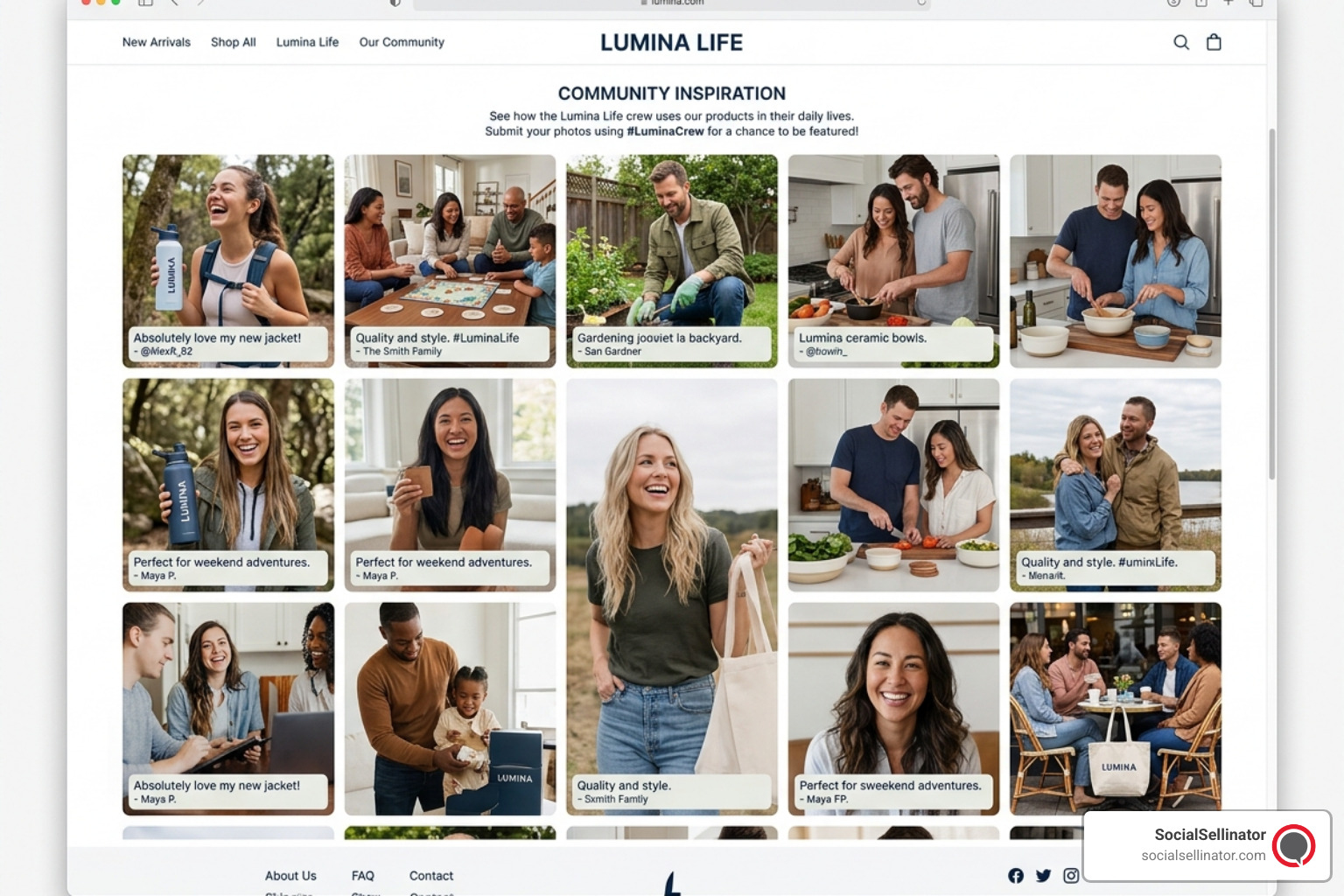
User-generated content (UGC) is the modern version of social proof, and in 2026, it is far more influential than any high-budget commercial. Highlighting member content makes the community feel co-created rather than corporate. It validates members’ expertise and passion, encouraging others to contribute their own stories and experiences.
User-generated content (UGC) is original, authentic content created by community members that serves as social proof and drives higher trust than brand-produced material.
According to, UGC drives percent higher conversion rates than brand-created content. SocialSellinator helps brands build UGC pipelines that turn customers into content creators and advocates. This content ecosystem reduces the burden on internal marketing teams while increasing authenticity.
To encourage UGC, create specific prompts, challenges, and themed campaigns that give members a framework for participation. Recognize and reward contributors publicly to reinforce the behavior. Feature member photos on main social feeds and acknowledge significant milestones with exclusive perks..
Moderating with a Proactive Stewardship Plan
Have clear, transparent rules and well-defined escalation paths. Safety and inclusivity are paramount in 2026. Moderation is not about policing; it is about stewardship—ensuring the space remains positive, constructive, and free from the toxicity that often plagues unmanaged digital spaces.
A well-moderated community is a safe haven for its members. According to research from, communities with documented moderation policies experience percent fewer instances of harmful behavior. Transparent guidelines also empower members to self-moderate, reducing the burden on official community managers.
Publish community guidelines prominently and reference them consistently. When enforcing rules, explain the reasoning behind each action. This transparency builds trust and helps members understand the standards expected of them. A proactive stewardship plan anticipates common issues and establishes protocols before problems arise.
Using Social Listening Tools to Stay Ahead of the Curve
Monitor conversations that happen off owned channels. Address concerns before they escalate into crises and capitalize on emerging trends to stay proactive. Social listening allows brands to hear the unspoken needs of a community, creating opportunities to surprise and delight members with solutions they did not even know they needed.
SocialSellinator deploys advanced social listening tools to capture sentiment shifts and trend signals across the entire digital landscape. These tools track brand mentions, competitor conversations, and industry keywords in real-time. According to, brands using social listening tools identify emerging trends percent faster than those relying on manual monitoring.
Beyond crisis prevention, social listening reveals product improvement opportunities, content gaps, and potential brand partnerships. The data gathered informs every aspect of digital marketing strategy, from SEO keyword selection to PPC ad copy..
How Do You Foster Member-to-Member Connections Intentionally?
The best communities are those where the brand is the glue, not the center. When members form their own relationships, a brand becomes an essential part of their social fabric. Create rituals, sub-groups, and networking opportunities that encourage members to help each other.
This reduces the burden on staff and increases the overall value of the community. Member-to-member connections create network effects that scale community value exponentially rather than linearly. According to community building research, communities where member-to-member interactions exceed brand-to-member interactions by percent show the highest retention rates.
Facilitate these connections through structured programs like mentorship pairings, interest-based sub-groups, and member-led events. Create dedicated spaces for off-topic conversations where members can bond over shared interests beyond the brand’s core topic. These social bonds make the community sticky in ways that brand content alone cannot achieve.
Balancing AI Efficiency with Human Empathy
Use AI to handle routine tasks like spam filtering, FAQ responses, and data analysis, but always keep humans at the center of emotional connections. AI can handle the when and the what, but only humans can handle the why and the how it feels. SocialSellinator advocates for a hybrid approach that leverages technology to scale without losing the personal touch.
According to a study, percent of consumers still prefer human interaction for complex or emotionally sensitive issues, even when AI chatbots are available. This preference underscores the importance of maintaining a human presence at critical touchpoints in the community journey.
AI can analyze sentiment across thousands of community interactions in seconds, but it takes a human community manager to turn that insight into a conversation that makes a member feel truly heard and valued.
AI tools can also segment community experiences, ensuring a new member gets a different, more educational welcome than a superfan who might receive early access to new products. This tiered approach ensures everyone feels they have a path to deeper involvement while keeping operational costs manageable.
Measuring Community Health Through Advocacy and Longevity
Look at organic interactions and word-of-mouth growth. True health is seen in the longevity of participation and how members defend the brand during a crisis. A healthy community is a brand’s most powerful moat against competitors, providing a level of loyalty that cannot be bought with advertising dollars.
SocialSellinator tracks Net Promoter Score (NPS) within communities, sentiment trends, and advocacy velocity as core health indicators. NPS measures the likelihood that members will recommend the community to others. Advocacy velocity tracks the rate at which members organically mention or promote the brand across external channels.
Longevity metrics include average member tenure, frequency of return visits, and the percentage of members who have been active for more than six months. These indicators reveal whether a community is creating lasting value or merely generating fleeting engagement spikes.
What Is Social Media Community Management in 2026?
In the landscape of 2026, community management has evolved into a sophisticated form of Social CRM (Customer Relationship Management). It is no longer just about responding to comments; it is a central hub for market intelligence, customer support, and brand advocacy. While traditional marketing is designed to bring people to the door, community management is what keeps them inside the room.
By integrating community management into a comprehensive digital marketing strategy, every touchpoint becomes an opportunity to build a lasting relationship. SocialSellinator ensures that SEO, PPC, and social media management efforts all feed into a central community hub, creating a seamless experience for the user. This integration means that traffic generated through search and paid channels enters a nurturing environment rather than bouncing away.
The modern community manager acts as the brand’s ears and heart. They are responsible for facilitating conversations rather than just broadcasting messages. This requires a high degree of emotional intelligence to spot trends early and understand the nuances of community sentiment. For example, noticing how users are hacking a product to use it in a new way can lead directly to new product features or marketing campaigns.
With 52% of Gen Z trusting social media for brand information more than traditional search engines, community is now a core discovery channel. This shift means community management directly impacts brand visibility and customer acquisition, not just retention..
Community Manager vs. Social Media Manager: Understanding the Nuance
While these roles are often confused, they are distinct in their objectives and daily activities. The Social Media Manager is essentially on stage with a microphone, focusing on the one-to-many broadcast. Their goal is reach, virality, and brand awareness. In contrast, the Community Manager is in the crowd, shaking hands and facilitating many-to-many discussions.
Both roles are vital, but they require different skill sets and success metrics. SocialSellinator integrates these roles into a cohesive strategy. Content gets people to the door, but it is the community that keeps them in the room.
| Feature | Social Media Manager | Community Manager |
| Primary Focus | Content Strategy & Distribution | Relationship Building & Facilitation |
| Goal | Reach, Awareness & Virality | Trust, Retention & Advocacy |
| Activity | Scheduling posts & Analyzing Reach | Facilitating discussions & Resolving Issues |
| Voice | Brand Voice (One-to-Many) | Advocate/Peer Voice (Many-to-Many) |
| Success Metric | Follower Growth & Impressions | Community Health, Sentiment & UGC |
By aligning these functions, SocialSellinator ensures a brand’s social presence is both wide-reaching and deeply engaging. This holistic approach separates successful brands from those that simply post content into a void.
How Does the SPACES Model Drive Strategic Community Growth?
The SPACES model categorizes community purpose into Support, Product, Acquisition, Contribution, Engagement, and Success to align community activities with business objectives.
The SPACES model categorizes the primary reasons why a community exists and helps align community activities with broader business objectives. By understanding which space a community occupies, brands can better tailor management tips to meet member needs.
- Support: Customers help each other solve problems, significantly reducing official support costs and increasing customer satisfaction. It creates a searchable repository of knowledge.
- Product: Gather feedback for product development directly from active and invested users. Power users often have the best ideas for new features or improvements.
- Acquisition: Use advocacy to reach new customers via word-of-mouth. A thriving community acts as a referral engine far more effective than paid advertising.
- Contribution: Encourage members to create content, share stories, and contribute to the brand’s narrative. This is where user-generated content flourishes.
- Engagement: Foster a sense of belonging to keep the brand top-of-mind. When members feel like they belong, they are much less likely to churn.
- Success: Help customers achieve personal or professional goals through the use of a product or service. This increases customer lifetime value and positions the brand as a partner.
For small and medium-sized businesses, the goal is often a strategic mix of engagement and acquisition. Key KPIs include the Active Member Rate and the Sentiment Score. SocialSellinator helps brands identify which SPACES categories align with their business objectives and build roadmaps accordingly.
Identifying and Segmenting Your Audience
A thriving fanbase is built on shared values and common goals. Develop detailed behavioral profiles to understand what motivates an audience at a deep level. In 2026, the most successful communities cater to high-intent niches rather than trying to be everything to everyone.
SocialSellinator uses advanced social listening to find subcultures and identify unmet needs, positioning a community as the definitive solution for a specific group. Segmentation allows for personalized experiences, ensuring each member feels seen and heard.
Effective segmentation considers both demographic and psychographic factors. Demographic data provides the skeleton—age, location, job title—while psychographic data adds the flesh—values, motivations, fears, and aspirations. Together, these data points create three-dimensional audience personas that guide every community decision.
Platform Selection: Where Does Your Community Live?
Choosing the right space is critical for strategy. Not all platforms are created equal, and the choice should be dictated by where an audience already spends time and the type of interaction a brand wants to foster.
| Platform | Best For | Voice Style | Interaction Type |
| Deep-dives, technical support, unfiltered feedback | Authentic, non-corporate, transparent | Threaded, asynchronous | |
| Discord | Real-time interaction with superfan groups | Casual, high-frequency, community-driven | Real-time chat, voice, sub-channels |
| Facebook Groups | Local communities and B2C interest-based groups | Friendly, accessible, familiar | Feed-based, moderate frequency |
| B2B networking, thought leadership, professional development | Professional, value-driven, industry-focused | Feed-based, professional networking |
Mastering one platform before expanding is a key piece of advice. Quality always trumps quantity in community building. SocialSellinator helps brands navigate platform-specific nuances to ensure a brand is welcomed as a valuable contributor rather than an intruder.
Nurturing Engagement and Rewarding Loyalty

The secret to building a raving fanbase is making members feel like they own a piece of the brand. This sense of psychological ownership drives long-term loyalty and advocacy. User-generated content is the most powerful tool in achieving this.
In 2026, raw, unpolished content from real customers builds significantly more trust than professional, high-production shoots. It feels real, relatable, and honest. SocialSellinator identifies the top 1% of members—true superfans—and develops specific programs to turn their passion into a sustainable marketing engine.
These advocates become the front line, helping to onboard new members and maintain the community’s culture. By investing in these key individuals, a brand creates a ripple effect of engagement throughout the entire community. Reward programs might include exclusive access to new products, recognition badges, or direct input on product roadmaps.
However, it is vital to remember that AI cannot replace human empathy. If a member is frustrated or has a complex issue, they need to talk to a person, not a chatbot. The hybrid approach—using AI for efficiency and scale, while reserving humans for the heart of the community—is the winning formula for 2026.
How Do You Handle Crisis Management and Moderation Workflows?
A community needs clear, enforceable guidelines to sustain growth and maintain a healthy environment. In 2026, moderation is a sophisticated balance of high-tech automated tools and nuanced human judgment. Without a plan, a single negative interaction can spiral into a brand-threatening crisis.
Real-time sentiment analysis spots potential crises before they break out. Streamlined escalation paths ensure small issues are handled quickly and major issues reach the right people immediately. A typical workflow involves three tiers:
- Tier 1: Routine Interactions. Answering FAQs, filtering spam, and welcoming new members. Often handled by AI or junior moderators following a strict brand voice guide.
- Tier 2: Nuanced Discussions. Handling technical issues, addressing mild complaints, or facilitating complex debates. Requires experienced managers with deep product knowledge and high emotional intelligence.
- Tier 3: Brand-Threatening Crises. Legal issues, major PR blunders, or widespread community unrest. Escalated immediately to PR, Leadership, and the SocialSellinator strategic team.
Transparency and speed are the two most important factors in crisis management. If a brand makes a mistake, the best course of action is to own it immediately and publicly. A sincere, human apology can often turn a vocal critic into a loyal fan because it demonstrates accountability. Never delete negative comments unless they violate safety or harassment rules; instead, solve the issue publicly. This builds trust with the silent majority of the community who are watching how adversity is handled.
Building a 90-Day Community Roadmap for SMBs
For small and medium-sized businesses, the goal is often a strategic mix of engagement and acquisition. Key KPIs include the Active Member Rate and the Sentiment Score. Working with a professional social media management agency like SocialSellinator allows brands to move from reactive posting to a structured 90-day roadmap.
This roadmap is designed to fix onboarding leaks, launch community rituals like Member Spotlights, and ensure a community consistently delivers value. The first 30 days focus on auditing existing community health and identifying quick wins. The second 30 days implement structural changes like new moderation guidelines and onboarding improvements. The final 30 days launch engagement rituals and measure impact against baseline KPIs.
This approach aligns naturally with broader digital marketing, SEO, and PPC efforts by ensuring traffic converts into lasting relationships instead of one-time clicks. By connecting community management to search engine ranking strategies and paid acquisition, SocialSellinator creates a unified growth engine..
FAQs
What are the most important brand community management tips for 2026?
The most important brand community management tips for 2026 include defining a clear community purpose, tracking health-centric KPIs like Active Member Rate instead of vanity metrics, leveraging user-generated content as a primary asset, balancing AI automation with human empathy, and fostering member-to-member connections. According to industry research, 86% of marketers say building an active community is crucial to long-term success.
How is community management different from social media management?
Community management focuses on building relationships, facilitating many-to-many discussions, and measuring trust, retention, and advocacy. Social media management focuses on content strategy, one-to-many broadcasting, and measuring reach, awareness, and virality. Both roles are vital but require different skill sets and success metrics. Community managers act as the brand’s ears and heart, while social media managers act as the brand’s voice.
What is the SPACES model for community building?
The SPACES model categorizes community purpose into six areas: Support (peer-to-peer problem solving), Product (gathering feedback for development), Acquisition (word-of-mouth referrals), Contribution (user-generated content creation), Engagement (building emotional equity and belonging), and Success (helping customers achieve goals). This framework helps align community activities with measurable business objectives.
Which platform is best for building a brand community?
The best platform depends on audience behavior and community goals. Reddit suits deep-dives, technical support, and unfiltered feedback. Discord is ideal for real-time superfan interaction. Facebook Groups work well for local communities and B2C interest groups. LinkedIn is the premier platform for B2B networking and professional development. Brands should master one platform before expanding to others.
How can user-generated content improve community engagement?
User-generated content serves as modern social proof and builds significantly more trust than professional, high-budget content in 2026. Highlighting member content makes a community feel co-created rather than corporate. UGC validates members’ expertise and passion, encouraging others to contribute their own stories. This creates a self-sustaining content engine that drives engagement and advocacy.
What KPIs should you track for brand community health?
Track engagement depth, member retention rates, Active Member Rate, ratio of member-generated to brand-generated posts, Sentiment Score, Net Promoter Score within the community, and advocacy velocity. Move away from vanity metrics like total follower count. True community health is reflected in the vitality of conversations that happen when the brand is not actively participating.
How do you balance AI and human interaction in community management?
Use AI to handle routine tasks like spam filtering, FAQ responses, and data analysis. Reserve human interaction for emotional connections, complex issue resolution, and crisis management. AI can handle the when and the what, but only humans can handle the why and the how it feels. This hybrid approach scales efficiently without losing the personal touch that drives community loyalty.
What should a community crisis management plan include?
A community crisis management plan should include clear, transparent moderation guidelines, a tiered escalation workflow, real-time sentiment analysis tools, and defined response protocols for routine interactions, nuanced discussions, and brand-threatening crises. Transparency and speed are critical—own mistakes publicly, never delete negative comments unless they violate safety rules, and respond with sincere, human accountability.
How can small businesses build a brand community?
Small businesses should focus on a strategic mix of engagement and acquisition, target high-intent niches, master one platform before expanding, and implement a structured 90-day roadmap. Key steps include fixing onboarding leaks, launching community rituals like Member Spotlights, and tracking KPIs such as Active Member Rate and Sentiment Score. Partnering with a professional social media management agency can accelerate this process.
Why is brand community management important for SEO and digital marketing?
Brand community management feeds into SEO and digital marketing by ensuring that traffic converts into lasting relationships rather than one-time clicks. A thriving community acts as a referral engine, generates user-generated content that boosts search visibility, and provides market intelligence that informs content strategy. SocialSellinator integrates community management with SEO, PPC, and social media for a cohesive digital marketing approach.
Related Articles
- Everything you need to know about the ranking of web pages in search engines
- How to Optimize Your Ecommerce Site Without Losing Your Mind
- Mastering Twitter Social Media Management Without Losing Your Mind
- Simple Steps to Improve Your Website Ranking on Google Today
- From Beantown to the Big Apple: Leading Digital Marketing Firms in Key Cities