

How to Build a Brand Community Without Losing Your Mind
Why Best Practices Brand Communities Are Now a Business Imperative
Dimensions: 1200×630 | Format: JPEG | Source: SocialSellinator
The best practices brand communities follow today look nothing like the Facebook Groups and email lists most brands built a decade ago. And that gap — between what brands think a community is and what actually drives commercial value — is costing them real money.
Here’s a quick answer if you want the essentials right now:
Top best practices for building a brand community:
- Define a clear purpose — build around your customer’s world, not your product
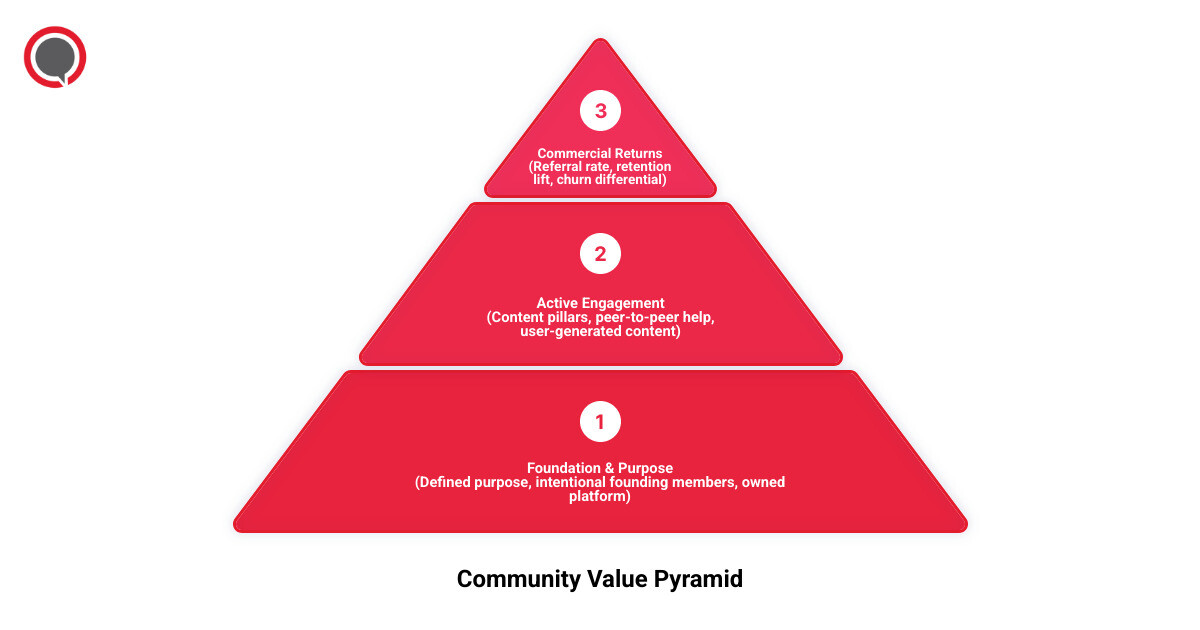
- Recruit founding members intentionally — your first 100–200 members set the culture permanently
- Choose the right platform — use social platforms to recruit, owned platforms to host
- Design 3–5 content pillars — give members recurring reasons to show up and contribute
- Reward early participation — acknowledge first contributions immediately with recognition or a badge
- Moderate actively — treat moderation as a growth function, not a policing task
- Build a knowledge base — make peer-to-peer answers easy to find and search
- Measure business outcomes — track referral rate, retention lift, and churn differential, not just member count
- Integrate insights into your product roadmap — close the loop so members see their feedback matter
- Be patient — most communities take 12–24 months to generate measurable commercial returns
Here’s the core insight most brands miss: a community is not an audience. An audience has a relationship with your brand. A community has relationships with each other. That distinction changes everything — from how you design the space, to how you measure success, to how much commercial value you can realistically extract.
When it works, a brand community becomes a compounding asset. It lowers your customer acquisition cost (CAC), increases retention, generates user-created content, and produces word-of-mouth that no paid media budget can replicate. One study found that community members spend approximately 19% more than non-members. And research consistently shows community members demonstrate 3–5 times higher lifetime value than customers who never join.
But most brands get the structure wrong from the start — and then wonder why engagement is flat after six months of effort.
I’m Jock Breitwieser, and in this guide I’ll walk you through exactly how to build a brand community that actually works — from defining your purpose and recruiting your first members, to moderating at scale and tying it all to metrics your leadership team will care about.
Dimensions: 800×1200 | Format: PNG | Source: SocialSellinator
Important best practices brand communities terms:
Brand Audience vs. Brand Community: The Strategic Shift
To build a thriving space, we must first address the fundamental structural mistake that dooms most initiatives: confusing an audience with a community.
An audience is a one-to-many broadcast channel. When we publish a blog post, send an email newsletter, or post on social media, we are speaking to an audience. The flow of communication is unidirectional. The audience might comment or double-tap, but their primary relationship is with us, the brand at the center.
A community is a many-to-many network. In a true community, the primary value comes from the relationships members form with each other. They answer each other’s questions, share personal successes, commiserate over shared challenges, and exchange advice. Our role as a brand shifts from being the sole entertainer on a stage to being the host of a lively dinner party.
Understanding this difference is key to developing healthy social media relationships that keep customers close to your brand.
| Feature | Passive Brand Audience | Active Brand Community |
|---|---|---|
| Communication Flow | One-to-many (broadcast) | Many-to-many (networked) |
| Primary Relationship | Customer to brand | Member to member |
| Key Metric | Impressions, reach, follower count | Active participation, peer-to-peer assistance, retention |
| Content Source | Exclusively brand-created | Highly user-generated (UGC) |
| Switching Costs | Low (price or feature changes can cause churn) | High (leaving means leaving a social network) |
| Commercial Value | Transactional, short-term | Relational, long-term compounding equity |
Why Modern Businesses Prioritize Best Practices Brand Communities
Why is this shift happening now? Over the past decade, paid media economics have steadily deteriorated. Rising CPMs, shifting privacy regulations, and crowded digital channels have made traditional customer acquisition incredibly expensive.
In this environment, building a community has transitioned from a warm-and-fuzzy PR project to a core strategic priority. Communities build defensive moats around businesses. While competitors can copy product features or match pricing, they cannot easily replicate the organic, trust-based relationships living inside your community.
Furthermore, communities drive customer retention. Retaining an existing customer is five to seven times cheaper than acquiring a new one. When a customer joins an active community, they experience a sense of belonging that increases their switching costs. They aren’t just buying a product; they are participating in a shared identity. This relational bond acts as a powerful retention engine, boosting customer lifetime value and establishing long-term brand equity.
Defining Purpose and Choosing the Right Platform
Before you write a single line of code or open a new channel, you must define the “job-to-be-done” of your community. Why should people invest their limited time and attention in your space?
If your answer is “to hear about our latest product updates,” your community will fail. People do not join communities to be marketed to. They join to solve a professional challenge, connect with peers who share an intense hobby, or learn a new skill.
To find your community’s purpose, look for the intersection between what your customers care about and where your brand has authority. For example:
- A fitness apparel brand shouldn’t build a community about clothing; they should build a community about training for ultra-marathons or overcoming mental barriers in athletics.
- A B2B software company shouldn’t build a community about their tool’s interface; they should build a community where operations professionals can discuss career growth and system architecture.
Once you have defined this core purpose, you can begin building a social media presence and selecting the infrastructure to support it.
Dimensions: 800×600 | Format: PNG | Source: SocialSellinator
Choosing where your community lives is a critical decision. Brands typically choose between two primary models:
- Third-Party Social Platforms (Facebook, LinkedIn, Discord): These networks offer low friction and high discoverability because your audience is already there. However, you are entirely at the mercy of their algorithms, you do not own your member data, and distracting ads or notifications are constantly pulling users away.
- Owned Platforms (Dedicated Community Software): Hosting your community on a dedicated platform gives you complete control over the user experience, deep data ownership, and direct integration with your CRM. It requires more effort to drive initial traffic, but it offers a far more secure, distraction-free environment for long-term growth.
For most growing brands, a hybrid approach works best. Use public social media channels to capture attention, share content, and recruit members. Then, systematically guide your most engaged followers into a dedicated, owned community space where they can build deeper relationships.
Structural Mistakes to Avoid in Community Architecture
The single most common architectural mistake brands make is falling into the “brand-centric trap.” This happens when every channel, discussion thread, and event is designed around the brand’s products, features, and promotions.
Instead, successful community design is customer-centric. The channels should reflect the daily lives, challenges, and goals of your members. If you sell cooking equipment, your channels should focus on recipe experimentation, sourcing rare ingredients, and kitchen organization — not just troubleshooting your specific blender.
Additionally, you must establish clear community guidelines before launching. These rules should be framed positively to set the cultural tone. Instead of a long list of “Don’ts,” encourage healthy participation:
- “Share generously” instead of “No hoarding resources.”
- “Keep discussions constructive and respectful” instead of “No insulting others.”
- “Disclose personal projects clearly” instead of “No self-promotion.”
Best Practices Brand Communities: Recruitment and Onboarding
A community’s culture is set by its first 100 to 200 members. If you launch to a massive, cold email list all at once, you will likely end up with a quiet, awkward space where everyone is waiting for someone else to speak.
Instead, recruit your founding members deliberately. Look at your existing customer base and identify your “superusers” — the individuals who already write long reviews, answer other users’ questions on social media, or regularly send feedback to your support team.
Reach out to these individuals personally. Tell them you are building an exclusive, invite-only space and want them to help shape its foundation. This personal touch makes them feel valued and personally invested in the community’s success. Their early, high-quality contributions will establish the standard of behavior for everyone who joins later.
Once you have your core group, focus on designing a seamless onboarding experience. The first 30 days of a member’s journey are critical. If they log in and don’t know what to do, they will leave and never return.
To optimize social media audience engagement during onboarding, guide new members through simple, low-friction micro-actions:
- The Welcome Prompt: Send an automated, warm welcome message containing a quick video from the community manager.
- The Easy First Win: Ask them to complete a simple task, such as introducing themselves in a dedicated “Introductions” thread using a structured template.
- The Immediate Reward: Have a community manager or a founding member reply to their introduction within hours. Acknowledging their first contribution immediately builds trust and encourages them to participate again.
Designing Content Pillars for Sustainable Engagement
To keep your community active without burning out your team, you must transition from a “content treadmill” (where you are constantly creating posts to keep people entertained) to a facilitated model (where you host and curate user-generated conversations).
Limit your community’s focus to 3 to 5 core content pillars. These pillars should address recurring member needs and support different stages of the buyer journey. For example, a community for digital marketers might use these pillars:
- Pillar 1: Strategy & Tactics (Value-driven): Weekly threads analyzing successful campaigns or breaking down industry updates.
- Pillar 2: Member Spotlights (UGC-focused): Celebrating a member’s career win or sharing their unique workflow.
- Pillar 3: Troubleshooting & Feedback (Support-driven): A safe space to ask for peer reviews on landing pages or ad creatives.
To make participation effortless, structure your content pillars around repeatable formats. You could host a “Metric Monday” where members share their weekly performance data, a “Work-in-Progress Wednesday” where users post drafts for feedback, or a monthly live AMA (Ask Me Anything) with an industry expert.
By utilizing these structured prompts, you encourage natural, organic user-generated content that search engines can easily index, expanding your organic reach over time.
Moderation, Knowledge Bases, and Scaling the Flywheel
As your community grows, moderation shifts from a simple policing task to a strategic growth function. A great moderator doesn’t just delete spam; they actively connect members who share similar interests, highlight valuable discussions, and protect the community’s psychological safety.
To sustain engagement without overwhelming your staff, we recommend applying the 70-20-10 content framework:
- 70% of content should provide pure value — educational guides, industry insights, and career resources.
- 20% should amplify community voices — highlighting user-generated content, member stories, and peer discussions.
- 10% can be promotional or product-focused — sharing product launches, exclusive discounts, or brand updates.
This balanced approach ensures your community remains a valuable resource rather than a non-stop sales pitch. To maintain this balance at scale, you can implement a community knowledge base.
A community knowledge base is an interactive, evolving ecosystem of insights built from the collective wisdom of your members. Instead of a static FAQ page, it continuously updates as members solve problems together. When a user asks a complex question and a peer provides a brilliant, detailed solution, a moderator can tag and archive that thread into the knowledge base.
This peer-to-peer support system deflects support tickets, reduces pressure on your internal customer service teams, and serves as an organic SEO engine by capturing real customer language and search intent.
To keep the community active, focus on boosting social media engagement through gamification and structured rewards. Assign badges to helpful contributors, feature active members in your newsletters, and invite your most dedicated users to join an exclusive “ambassador” or “moderator” program.
Integrating Community Insights into Product Development
One of the greatest business benefits of a brand community is the direct, unvarnished feedback loop it creates with your customers. Instead of spending thousands of dollars on clinical focus groups or sending boring surveys that get ignored, you can observe real-time discussions about your products.
When members feel safe and valued, they will openly discuss what they love, what frustrates them, and what features they wish you would build.
To leverage this feedback effectively:
- Create a dedicated co-creation space: Give members a channel to submit ideas, vote on feature requests, or participate in beta testing.
- Close the feedback loop: When you update a product or fix a bug based on community feedback, announce it publicly in the community. Say, “You asked for this, and we built it.” This transparent communication shows members that their voices truly shape your brand’s future.
Measuring Success: KPIs and Commercial Value
A common trap for community managers is relying solely on vanity metrics like total member count or daily active users. While these numbers show activity, they do not demonstrate commercial value to your executive team.
To prove the financial impact of your community, you must connect participation directly to business outcomes. This starts with developing an authentic brand strategy that aligns community goals with your overall marketing and retention objectives.
The most commercially valuable KPIs include:
- Referral-Assisted Revenue: Tracking how many new customers were referred by active community members.
- Retention Lift & Churn Differential: Comparing the annual retention rate of community members against non-members. (Members of active communities repurchase at higher rates, creating switching costs that have nothing to do with price).
- Customer Acquisition Cost (CAC) Reduction: Community lowers CAC in two ways: it improves conversion rates (as prospects browse real customer reviews and discussions) and it reduces the need for incremental paid ad spend.
- Support Deflection Rate: Measuring the percentage of customer queries resolved peer-to-peer within the community knowledge base, multiplied by your average cost per support ticket.
How to Apply Best Practices Brand Communities for B2B Growth
While B2C communities often focus on lifestyle, shared hobbies, and brand advocacy, B2B brand communities operate under different dynamics. In B2B, peer trust is incredibly high, and buyers trust their professional peers far more than they trust sales reps or marketing decks.
B2B communities work best when they are built around a shared professional challenge, discipline, or industry transition rather than the vendor’s product.
For B2B growth, focus on these three strategies:
- Facilitate peer connections: Build a space where members can network, share career opportunities, and discuss industry-wide challenges.
- Empower practitioners: Provide advanced educational resources, templates, and frameworks that help members excel in their daily jobs.
- Position your brand as the convener: Your role is to facilitate the conversation, not dominate it. By bringing brilliant minds together, your brand becomes synonymous with industry leadership and trust.
Frequently Asked Questions About Brand Communities
How long does it take to see commercial returns from a brand community?
Building a genuine community is a long-term strategic investment that requires patience. Most brand communities take 12 to 24 months to reach a point of maturity where they generate measurable, compounding commercial returns.
The early months are focused on establishing trust, recruiting founding members, and building the habits of interaction. Brands that expect immediate sales within the first six months often over-commercialize the space too early, which kills the organic trust required for the community to survive.
Can a brand community help lower customer support costs?
Yes, absolutely. By encouraging peer-to-peer assistance and archiving those discussions into an interactive knowledge base, communities can reduce customer support costs by up to 72%.
When a member runs into an issue, they can easily search the community archives to find step-by-step walkthroughs written by other users. This support deflection resolves customer queries faster and significantly reduces the volume of support tickets landing in your team’s inbox.
What is the 90-9-1 rule in community engagement?
The 90-9-1 rule is a classic model of participation inequality in online networks:
- 90% of members are “lurkers.” They consume content, read discussions, and learn from others, but rarely post or comment.
- 9% of members are “occasional contributors.” They participate sometimes, replying to threads, voting in polls, or sharing occasional updates.
- 1% of members are “super-contributors.” They create the vast majority of the content, start new discussions, welcome newcomers, and drive the community’s daily energy.
As a community manager, your job is not to force the 90% of lurkers to post. Instead, focus on providing high-value content that keeps them engaged, while nurturing the 9% of occasional contributors and empowering your 1% of super-contributors with recognition, exclusive perks, and leadership roles.
Conclusion
Building a brand community doesn’t have to be overwhelming. By defining a clear, customer-centric purpose, recruiting your founding members intentionally, designing focused content pillars, and measuring the business outcomes that truly matter, you can turn your community into a compounding asset that drives long-term growth.
But you don’t have to navigate this journey alone. At SocialSellinator, we specialize in helping brands design, launch, and manage high-impact digital marketing, SEO, PPC, and community strategies that deliver measurable results.
Ready to turn your audience into an active, loyal brand community? Explore our social media management services today to see how we can help you scale your business and boost your bottom line.
Headquartered in San Jose, in the heart of Silicon Valley and the San Francisco Bay Area, SocialSellinator proudly provides top-tier digital marketing, SEO, PPC, social media management, and content creation services to B2B and B2C SMB companies. While serving businesses across the U.S., SocialSellinator specializes in supporting clients in key cities, including Austin, Boston, Charlotte, Chicago, Dallas, Denver, Kansas City, Los Angeles, New York, Portland, San Diego, San Francisco, and Washington, D.C.