

A Practical Guide to Vetting Social Media Management Companies
How to Choose Companies That Manage Social Media
Header image: A marketing team reviews a multi-platform campaign.
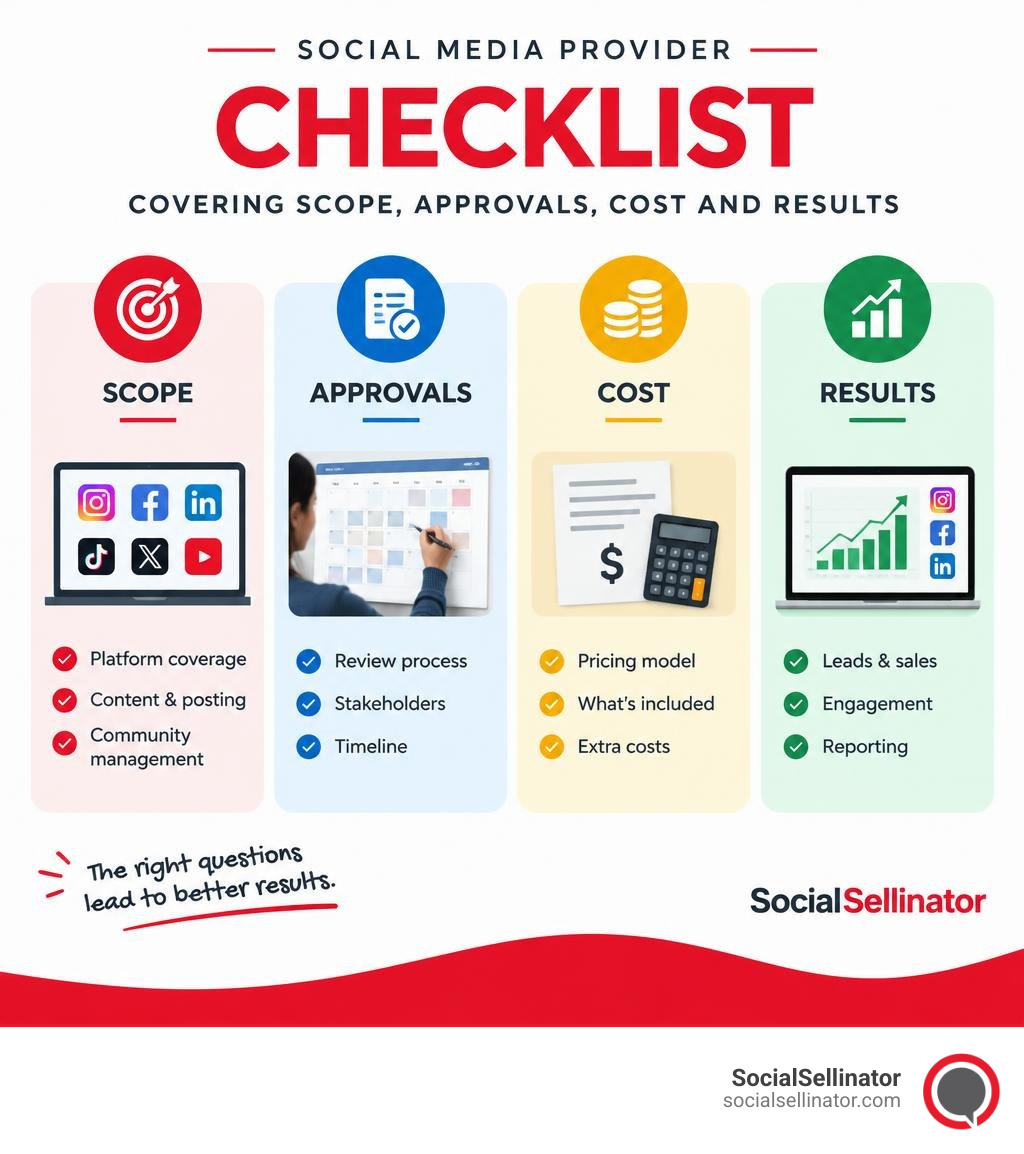
Start with the work you need done. Companies that manage social media include software providers and full-service agencies. Choose software if your team can set strategy, review posts, and handle customer replies. Choose an agency if you need people to own content, community management, and reporting. In either case, ask for a clear scope, an approval process, and proof that results tie to leads or sales.

In-line image: A manager checks planned posts before publication.
AI can speed up planning and drafting, but it still needs a person to check facts and protect your brand voice. An agency can take on more of that work, but the retainer should spell out who does what.

In-line image: A team reviews campaign results against business goals.
I’m Jock Breitwieser, and I’ll walk you through the questions that help you compare providers before you sign.
Infographic: A quick framework for narrowing your shortlist.
Terms related to companies that manage social media:
Types of Companies That Manage Social Media: AI Platforms vs. Full-Service Agencies
Navigating the landscape of social media solutions requires understanding the operational divide between autonomous AI software platforms and full-service agency partners. Businesses looking for external support generally fall into two categories: those needing intelligent software to empower their internal staff, and those requiring an expert team to conceptualize, produce, and manage campaigns from end to end.
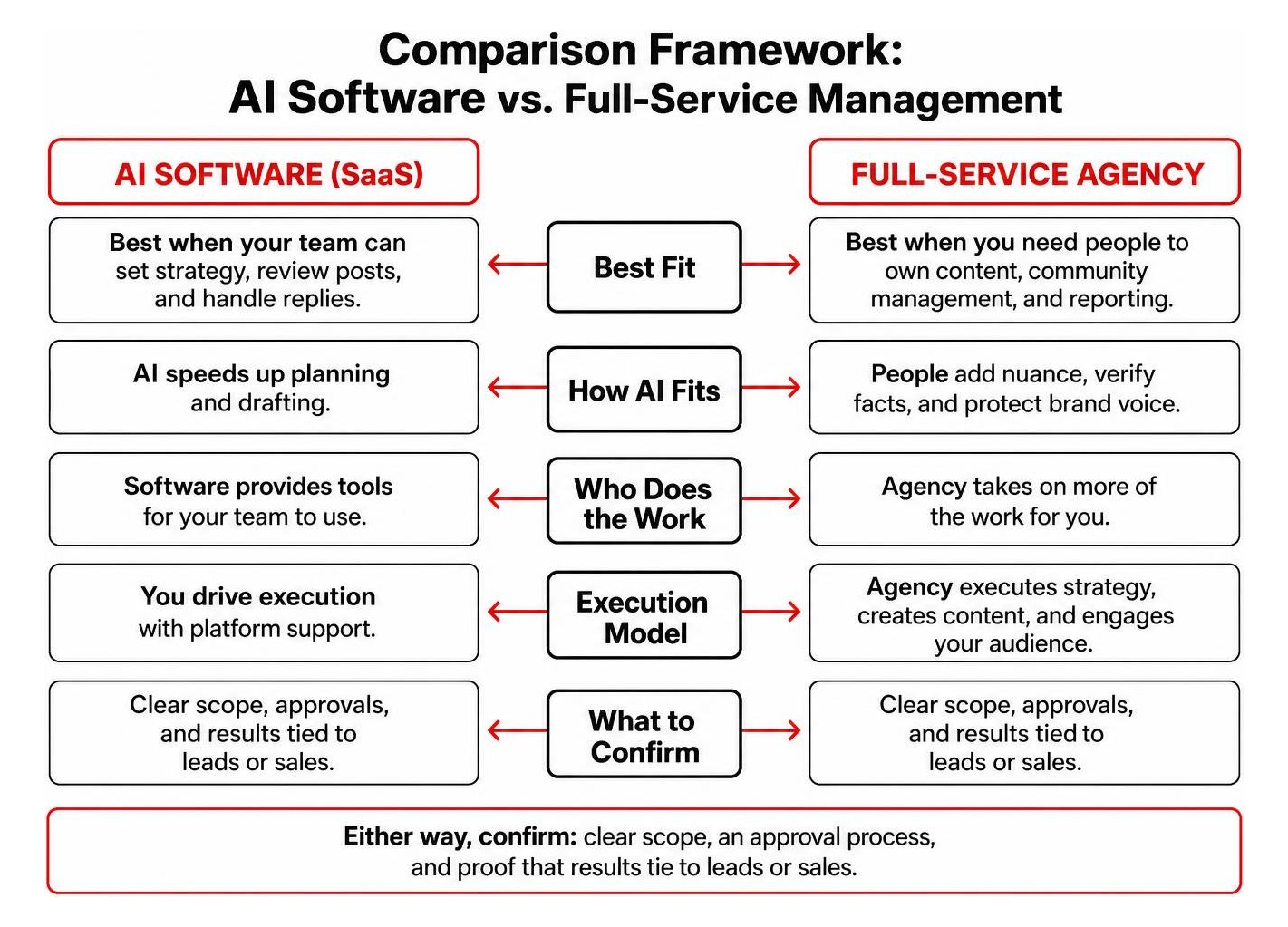
Autonomous AI platforms function as centralized operating engines. They aggregate cross-network data, automate scheduling, draft copy using natural language models, and monitor basic engagement triggers. Conversely, a dedicated social media management agency provides human-led strategy, creative production, nuance-driven community management, and direct commercial accountability. While software gives you tools to complete a job, an agency partner takes ownership of the business outcomes.
| Feature / Capability | Autonomous AI Platforms (SaaS) | Full-Service Digital Agencies | Hybrid Solutions |
|---|---|---|---|
| Primary Execution | Automated algorithms & prompt inputs | Dedicated human strategists & creators | AI-assisted workflows guided by humans |
| Strategy Development | Template-driven recommendations | Custom, business-aligned market strategy | Collaborative strategy with tool access |
| Content Production | Algorithmic copy & generative visuals | Bespoke photography, custom video, tailored copy | Human-edited AI drafts & curated assets |
| Community Management | Automated trigger replies & keyword sorting | Live human interaction & sentiment escalations | Hybrid rules-based sorting with human replies |
| Average Monthly Cost | $5 – $300 / month | $1,500 – $10,000+ / month | $500 – $2,500 / month |
| Best Suited For | Solo founders & operational marketing teams | Growing SMBs & established enterprises | Mid-market teams needing tactical support |
How AI Social Media Operating Systems and Autonomous Agents Function
Modern AI social media agents go beyond basic scheduling. Cloud platforms serve as workflow accelerators, leveraging natural language processing and semantic memory to analyze past post performance, capture audience tone, and produce synchronized cross-platform publishing plans. These engines automate data aggregation across multiple social channels, generate initial copy drafts, suggest optimal hashtag clusters, and surface trending industry conversations.
Platforms feature dynamic creative modules that generate campaign briefs, draft multi-network copy, and produce visual asset variations across networks like Instagram, LinkedIn, TikTok, X, and Threads. Integrated CRM pipeline automations can listen for inbound keyword triggers and update sales pipelines instantly. These systems use historical account intelligence to create dozens of content concepts in seconds, cutting manual reporting time while processing cross-channel engagement signals.
These automated systems excel at several operational tasks:
- Predictive Content Planning: Analyzing historical engagement metrics to propose optimal posting days, hours, and topical formats.
- Dynamic Asset Generation: Creating multi-size graphic variations, carousel sequences, and auto-captioned video scripts from structured prompt templates.
- Semantic Inbox Routing: Categorizing inbound comments and direct messages by sentiment, auto-drafting responses, and pushing warm sales inquiries directly into internal CRM databases.
However, self-service software requires internal personnel to manage prompt engineering, fact-check generated copy, ensure visual consistency, and engage with high-value prospect interactions.
What to Expect from Companies That Manage Social Media via Agency Retainers
While software offers operational speed, full-service management provides strategic depth. When businesses choose to outsource social media management to an agency retainer, they gain access to a dedicated pod of professionals: senior content strategists, graphic designers, video editors, copywriters, and paid media buyers.
An agency partner manages the full lifecycle of your digital channels:
- Comprehensive Brand Audits: Evaluating current audience demographics, competitor positioning, and content gaps across target channels to establish differentiated messaging.
- Custom Content Production: Filming native short-form video (such as Instagram Reels, TikToks, and YouTube Shorts), designing branded carousel graphics, and drafting long-form thought leadership articles.
- Community Management SLAs: Enforcing strict service-level agreements—such as standard two-hour response times during business hours—to answer inquiries, address customer issues, and foster discussions.
- Integrated Digital Marketing Execution: Aligning social publishing calendars with broader growth initiatives, including search engine optimization (SEO), pay-per-click (PPC) campaigns, and conversion rate optimization to drive predictable revenue.
Evaluating Core Capabilities and Technical Features
Selecting the right partner requires looking beyond surface-level marketing promises to examine their specific technological and operational capabilities. Whether evaluating independent platforms or agency tech stacks, businesses must assess how effectively a provider manages multi-channel workflows, integrates with existing sales architectures, and protects brand reputation.
Deploying the best social media management tool infrastructure ensures your team maintains oversight across all channels, avoiding fragmented communication and disconnected analytics.
Essential Features Offered by Companies That Manage Social Media
High-performing management providers rely on integrated systems designed to maximize operational efficiency and support enhancing brand awareness through social media management. Key technical components include:
- Multi-Platform Publishing Engines: Seamless publishing across diverse social networks—including Meta properties, LinkedIn, TikTok, YouTube, X, and Threads—ensuring posts respect native aspect ratios, character constraints, and network-specific formatting rules.
- Unified Engagement Inboxes: A single communications console that consolidates public comments, story mentions, and private direct messages across all profiles into one shared queue with clear team assignments.
- CRM and Pipeline Synchronization: Native integrations with commercial customer relationship management software via Webhooks or direct APIs, instantly transmitting leads captured via social direct messages into your central sales software.
- Advanced Social Listening: Real-time sentiment tracking, brand mention monitoring, and competitive benchmarking that surfaces industry conversations as they happen.
- Link-in-Bio and Click Attribution: Dynamic landing page builders that track visitor journeys from bio links through to transactional purchases, downloads, and form submissions.
Brand Voice Alignment, AI Risks, and Human Oversight Workflows
Generative AI introduces operational challenges, including tone inconsistencies, generic phrasing, and factual inaccuracies (hallucinations). If an unmonitored automated system posts inaccurate product details or responds inappropriately to a frustrated customer, the brand takes the reputational hit.
To mitigate these risks while streamlining operations social media management for small business, reputable providers employ structured safeguards:
- Semantic Brand Memory Modules: Advanced setups index past blog articles, approved messaging frameworks, brand style guides, and customer support documentation to ground automated generation in brand-specific language.
- Mandatory Human-in-the-Loop Reviews: Strict editorial policies where no asset is published without manual verification by an experienced editor and account strategist.
- Escalation Playbooks for Crisis Control: Defined workflows that automatically disable autonomous auto-responders and route sensitive customer complaints directly to senior management.
Strategic Scope: Platform Prioritization, Organic Growth, and Paid Advertising
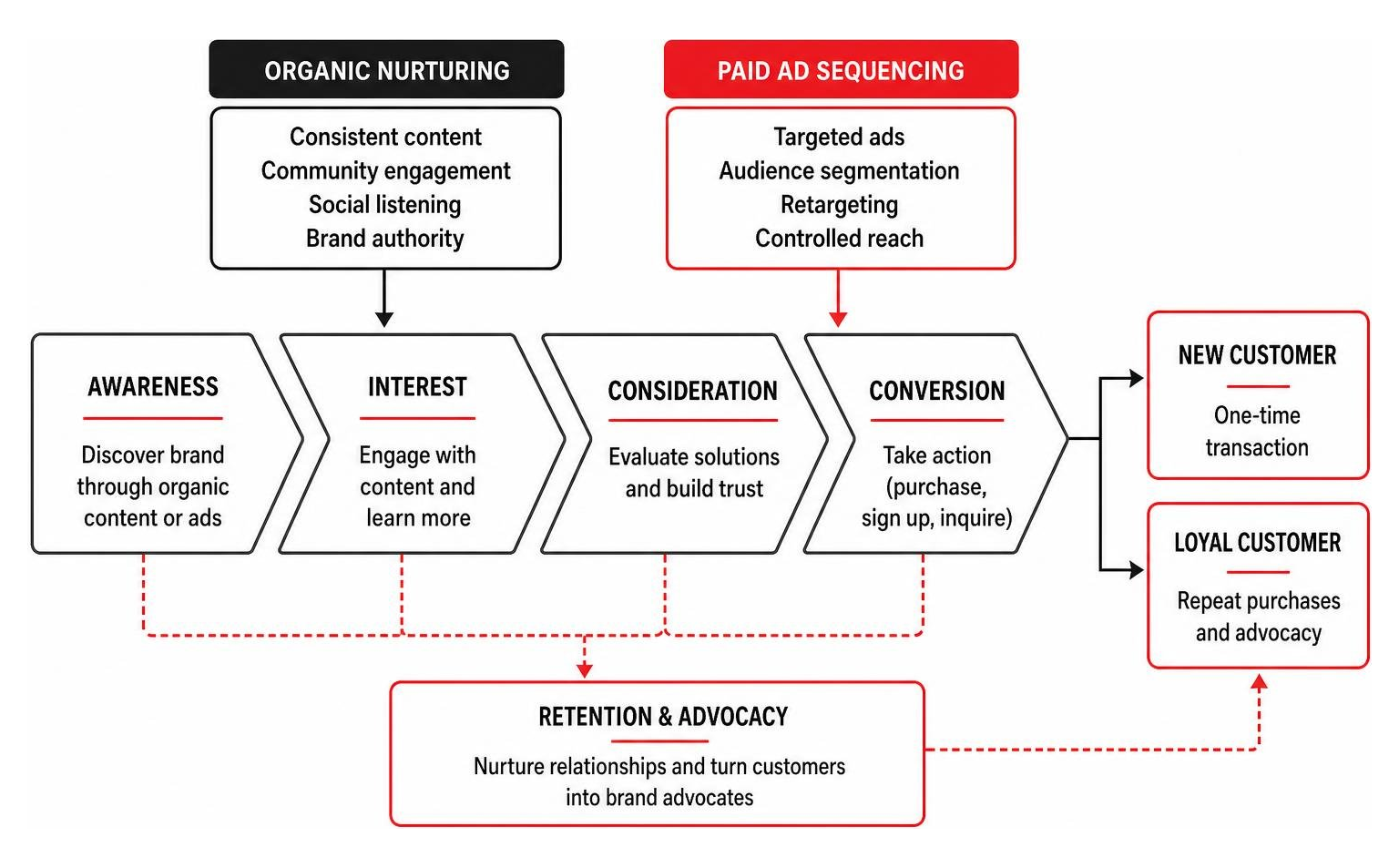
A successful social media program balances consistent organic community building with targeted paid advertising. Providers that attempt to rely entirely on organic reach often struggle against evolving platform algorithms, while those focusing solely on paid ads risk losing authentic audience engagement.
Our comprehensive social media management guide emphasizes that organic social content builds credibility and nurtures existing communities, while paid social advertising creates targeted reach and predictable top-of-funnel customer acquisition.
Balancing Organic Community Management with Paid Social Campaigns
Relying entirely on organic posting limits your reach to a small fraction of your existing followers due to platform algorithms prioritizing paid distribution. Conversely, running paid ads without maintaining an active, credible organic feed often leads to high acquisition costs; prospective buyers frequently check an advertiser’s organic profile before purchasing.
A balanced management strategy integrates both approaches:
- Organic Content for Social Proof: Regular organic updates demonstrate that your business is active, reliable, and engaged with its customer base.
- Paid Amplification for Top Performers: Top-performing organic posts are boosted to targeted lookalike audiences and custom demographic segments.
- Full-Funnel Retargeting Sequencing: Our detailed meta advertising management guide illustrates how top-of-funnel short-form video ads introduce your brand, middle-of-funnel consideration campaigns highlight customer reviews, and dynamic bottom-of-funnel retargeting ads convert engaged profile visitors into buyers.
Platform Selection and Native Content Production
Different platforms serve distinct business objectives. Vetting an agency requires verifying that they produce content tailored specifically to the platforms where your target audience spends their time, which is essential to enhance customer engagement through social media management.
- LinkedIn: The primary destination for B2B lead generation, industry authority, and executive personal branding. Strategies focus on document carousels, text-driven insights, and direct executive engagement.
- Instagram: Critical for lifestyle, visual B2C brands, and local service providers. Success depends on high-quality vertical Reels, interactive Stories, and cohesive carousel layouts.
- TikTok & YouTube Shorts: Essential for driving organic reach and algorithm-driven discovery. Content demands unpolished, native short-form video, relatable founder commentary, and participation in relevant trends.
- Meta (Facebook Ecosystem): Highly effective for local business discoverability, multi-generational community groups, and conversion-focused paid advertising campaigns.
Pricing Models and Measuring Real Return on Investment
Understanding the pricing structures of companies that manage social media helps ensure you secure clear value while avoiding unexpected fees or hidden markups. Pricing generally spans low-cost self-service software tiers to high-touch full-service agency partnerships.
When evaluating how much social media management costs, businesses must weigh internal labor costs against the comprehensive deliverables provided by an external team.
Understanding Pricing Tiers: SaaS Subscriptions vs. Monthly Retainers
Investment levels vary based on your operational model, posting frequency, production complexity, and the number of channels managed:
- SaaS Tool Subscriptions ($5 – $300 / month): Self-service platforms provide software access for in-house teams. These tools streamline internal workflows, but your staff remains responsible for strategy, copywriting, asset design, and community replies.
- Entry-Level & Hybrid Services ($499 – $1,499 / month): Often providing a set number of monthly posts (typically 8 to 15 assets across 1 or 2 platforms) using structured templates and light AI generation. Reviewing guides on social media maintenance packages helps clarify what basic packages include.
- Comprehensive Agency Retainers ($1,500 – $6,000+ / month): Full-service management covering custom video production, graphic design, multi-platform publishing, real-time community engagement, and strategic consulting. These packages are typically structured around monthly social media marketing packages tailored to specific business growth targets.
- Enterprise & Multi-Location Programs ($6,000 – $15,000+ / month): Designed for larger organizations requiring daily short-form video production, dedicated account teams, custom attribution modeling, creator management, and active multi-channel paid ad management.
Proving Business Impact: Attribution, Lead Tracking, and Conversion Metrics
Vetting a management company requires asking how they measure and report business results. Providers should focus on metrics that align directly with business revenue rather than relying solely on vanity figures like impressions or follower counts.
A reliable partner focuses on tracking key commercial indicators:
- Direct Message Lead Generation: Measuring prospective clients who initiate direct conversations regarding pricing, consultations, or product availability.
- Click-Through and Referral Traffic: Utilizing web analytics platforms with structured campaign tracking codes to measure how effectively social channels drive qualified traffic to your website.
- Customer Acquisition Cost (CAC) & ROAS: Tracking conversion efficiency across paid ad campaigns to maintain clear profitability guardrails, demonstrating how social media management for small businesses drives bottom-line growth.
Frequently Asked Questions About Hiring Social Media Management Providers
How do client approval workflows differ between AI platforms and full-service agencies?
AI software platforms generally use integrated scheduling dashboards where your internal team reviews auto-generated captions, edits visual assets, and approves publication directly within an interactive calendar.
In contrast, full-service marketing agencies provide formal client portal environments or regular editorial calendars. Agency strategists deliver planned content batches (often two to four weeks in advance) alongside clear campaign briefs. This gives your internal stakeholders dedicated review windows to request edits, verify factual accuracy, and approve assets before anything goes live.
What are the main risks of using AI for social media management and how can they be mitigated?
The main risks of unmonitored AI implementation include:
- Tone Drift: The AI may produce generic copy that fails to capture your brand’s unique point of view.
- Hallucinations: Inaccurate claims regarding your pricing, operational hours, or service deliverables.
- Inappropriate Automated Engagement: Pre-programmed responses inadvertently misinterpreting customer nuance or escalating complaints.
These challenges can be mitigated by establishing human-in-the-loop review policies, utilizing semantic brand reference databases, and setting up keyword-based escalation triggers that pass sensitive customer interactions directly to human managers.
When should a growing business transition from DIY software to a dedicated agency?
A growing business should evaluate transitioning from self-service software to an agency partner when:
- Internal Bandwidth Peaks: Company leadership or internal marketing personnel spend hours managing social channels at the expense of higher-leverage business operations.
- Growth Hits a Plateau: Follower growth and social traffic stall despite consistent manual posting.
- Content Quality Lags Competitors: In-house teams lack the creative resources to produce high-performing native formats, such as vertical video and custom graphics.
- Cross-Channel Complexity Scales: Managing multi-channel campaigns, paid media budgets, and community engagement outgrows current team capacity. Understanding the realistic price of social media management helps businesses make this transition at the right financial milestone.
Conclusion
Finding the right partner among companies that manage social media comes down to identifying the operational gap in your current marketing strategy. If your internal team possesses clear strategic direction and creative capacity, modern software platforms can streamline scheduling and execution. However, if your business requires an experienced team to take full ownership of your content pipeline, community engagement, and revenue attribution, partnering with an award-winning digital marketing agency is often the most effective path forward.
By establishing clear evaluation criteria—covering strategic alignment, brand safety measures, native content production, and conversion tracking—you ensure your marketing investment drives measurable commercial growth. Discover how our team at SocialSellinator can elevate your digital presence through fully managed, done-for-you social media marketing designed to increase visibility and support your bottom line.
Headquartered in San Jose, in the heart of Silicon Valley and the San Francisco Bay Area, SocialSellinator proudly provides top-tier digital marketing, SEO, PPC, social media management, and content creation services to B2B and B2C SMB companies. While serving businesses across the U.S., SocialSellinator specializes in supporting clients in key cities, including Austin, Boston, Charlotte, Chicago, Dallas, Denver, Kansas City, Los Angeles, New York, Portland, San Diego, San Francisco, and Washington, D.C.