

Your Guide to Genuine Connections on LinkedIn
Beyond the Connection Count: Why LinkedIn Relationship Building Really Matters
Image metadata: Title: Beyond the Connection Count Header; Alt: Header image depicting professionals connected by digital nodes and lines, symbolizing trust-driven networking on LinkedIn; Concept: LinkedIn relationship building; Format: JPG; Placement: Header; Subject: Professional networking, trust, connection quality; Rights: Licensed asset managed by SocialSellinator.
LinkedIn relationship building is about creating genuine professional connections that lead to mutual value, not just collecting contacts. It’s a strategic approach that prioritizes quality over quantity, changing your network from a passive list into an active asset for career and business growth.
Many professionals treat LinkedIn like a digital business card collector, sending generic requests and wondering why their large network yields no real opportunities. The truth is that LinkedIn works best when you focus on relationships, not just connections. Research shows that 51% of buyers are more likely to consider a seller’s solution when that seller understands their business needs. This understanding is built on trust, genuine interest, and providing value over time.
Effective relationship building on LinkedIn involves several key components:
- Personalized Outreach: Tailoring your communication to the individual.
- Providing Value First: Sharing insights, making introductions, or offering help before asking for anything.
- Consistent Engagement: Regularly interacting through comments, messages, and content sharing.
- Authentic Interest: Focusing on understanding others’ needs and challenges.
Strong professional relationships can open doors to unadvertised job opportunities, introduce you to key decision-makers, and provide invaluable industry insights. Successful networkers understand that building relationships requires consistent deposits of value and trust. They know that authenticity always beats a polished sales pitch, and that this approach is what separates them from mere connection collectors.
A common misconception is that momentum on LinkedIn comes from volume. In reality, momentum comes from relevance. Relevance is the product of three inputs: knowing who you want to meet, understanding what they value, and showing up consistently where they already engage. When your content, comments, and messages align with a person’s priorities, you become a familiar, trusted presence rather than random noise.
Consider a simple scenario. A product marketer follows a VP of Revenue, regularly adds thoughtful comments to the VP’s posts, and occasionally shares a useful framework tailored to that VP’s industry. After a few weeks, the marketer messages: “Noticed your team is optimizing post-demo conversion. I’ve tested a one-page ROI calculator that lifted ours by 12%. Happy to share the template if helpful.” That message gets opened because it comes from a person who has already demonstrated relevance and goodwill. That’s the difference between building relationships and chasing attention.
Relationship building also compounds. Each authentic interaction improves future interactions. Over time, you’ll find that warm replies, referrals, and opportunities arrive faster because you’ve built trust equity. This compounding effect is the same principle that underpins long-term digital marketing success—consistent, value-forward actions that strengthen your brand and broaden your influence.
For professionals and teams, the payoff extends beyond individual wins. When relationship building is integrated with your broader digital marketing, SEO, PPC, and content efforts, your messages resonate more, your pipeline quality improves, and your brand earns authority in the exact communities that matter. That integration is what turns one-off conversations into steady, sustainable growth.
The Foundation: Optimizing Your Profile for Connection
Your LinkedIn profile is your digital handshake, and first impressions are critical. For effective LinkedIn relationship building, your profile serves as the foundation for every connection you make. Before anyone accepts your request or engages with your content, they will view your profile to make a snap judgment about your professionalism and expertise.
A well-crafted profile builds trust, establishes your professional brand, and attracts the right people—be they clients, collaborators, or employers. It’s not just about filling out fields; it’s about creating a cohesive narrative that tells people who you are, what value you bring, and why they should connect with you. When done right, your profile becomes a powerful part of your digital marketing strategy.
Crafting a Compelling Headline and Summary
Your headline is prime real estate, appearing everywhere you do on the platform. Don’t waste it with a bland job title. It should be a personal brand statement that communicates what you do, who you help, and what makes you different. Pack it with relevant keywords to improve your visibility in LinkedIn’s search results.
For example, instead of “Marketing Manager,” try “Marketing Manager | Helping SaaS Startups Scale Through Data-Driven Digital Strategies.” The second version tells a story and signals your value proposition.
Your summary is your chance to connect on a human level. Blend professional accomplishments with personality. Explain not just what you’ve done, but why you do it. Authenticity wins here. Share your professional journey and end with a subtle call to action, inviting people to connect or start a conversation.
The Visual Element: Profile Photo and Banner
Your profile photo is often the first thing people see. A professional headshot is non-negotiable—it should be clear, well-lit, and focused on your face. A genuine smile makes you appear approachable. Save vacation photos and group shots for other platforms.
Your banner image is a golden opportunity for visual storytelling that many people ignore. Use this space to reinforce your industry expertise, showcase your company, or highlight your unique value proposition. Brand consistency is key. If you represent a company, use its colors or imagery. If you’re building a personal brand, choose visuals that represent your professional identity. Your banner should complement your profile’s message, not distract from it.
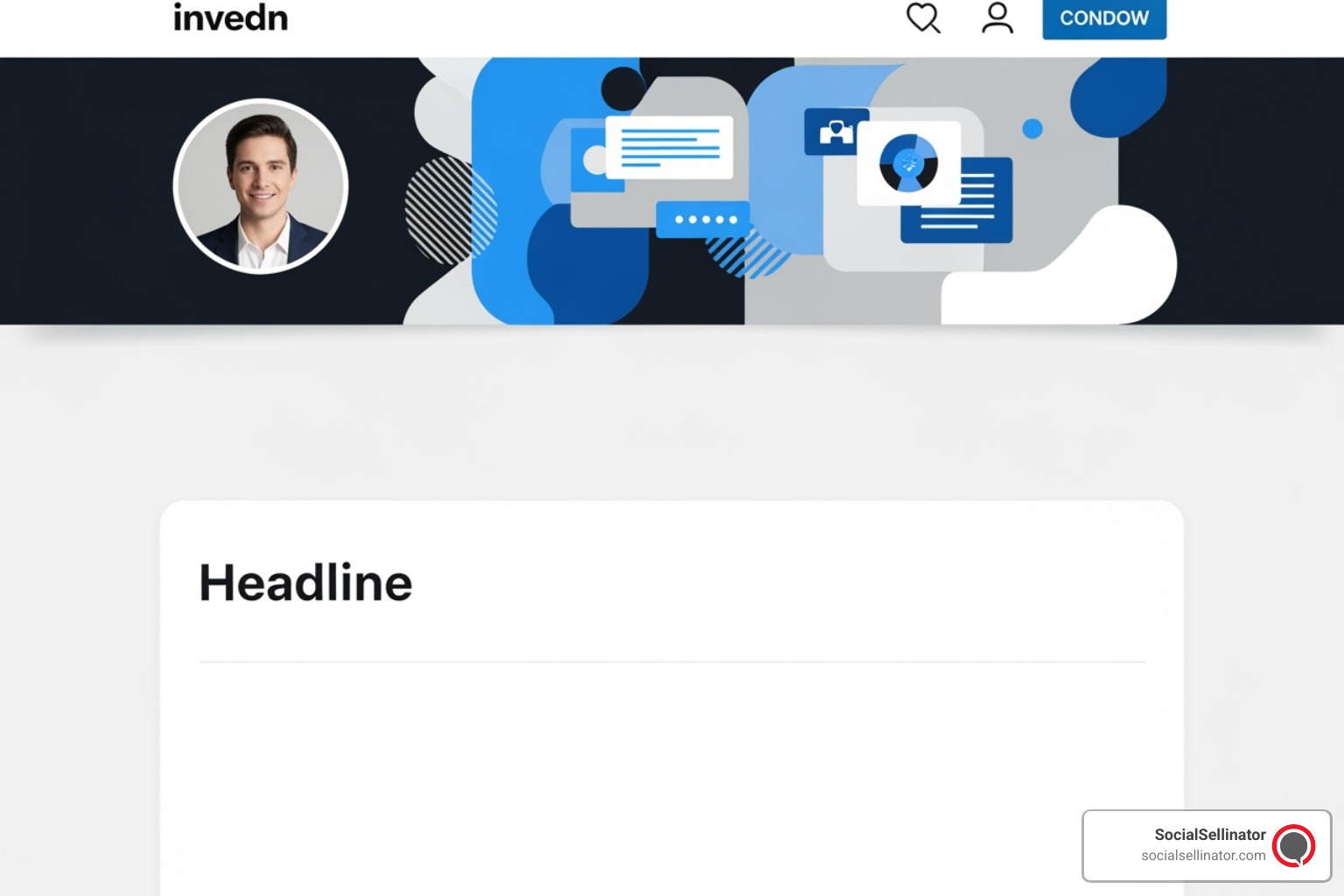 Image metadata: Title: Profile Optimization Visual; Alt: A sleek, modern LinkedIn profile header with a professional headshot, a custom banner featuring abstract digital marketing graphics, and a clear, concise headline; Concept: LinkedIn relationship building; Format: JPG; Placement: Inline visual; Subject: Personal brand, profile optimization, visual credibility; Rights: Licensed asset managed by SocialSellinator.
Detailing Your Experience, Skills, and Recommendations
When detailing your experience, focus on accomplishments, not just duties. Quantifiable results are your best friend. Did you increase sales by 30% or launch a campaign that generated 500 new leads? Concrete numbers provide immediate credibility and demonstrate your tangible value.
Your skills section is a tool for social proof. When connections endorse your skills, they validate your expertise. These endorsements are prominently displayed and influence how others perceive your capabilities.
Recommendations are even more powerful. A thoughtful recommendation from a colleague, manager, or client carries immense weight. These personal testimonials validate your technical abilities, work ethic, and character. Don’t be shy about asking for recommendations from people who know your work well. Offering to write them for others is also a great way to strengthen relationships.
Additional Profile Elements That Boost Trust
- Featured section: Pin your best work—case studies, videos, slide decks, or a one-pager that articulates your methodology. Think of this as your proof-of-value shelf.
- Custom URL: Claim a clean profile URL that includes your name; it reinforces professionalism and helps with discoverability in branded search.
- Creator Mode and Topics: If appropriate, turn on creator mode and choose topics aligned with your niche. This signals what conversations you lead and why people should follow.
- Contact info and availability: Make it easy to reach you. Add your business email and preferred scheduling method. Friction kills momentum.
- Pronunciation and name clarity: If your name is commonly mispronounced, consider using the name pronunciation feature. Clear communication builds rapport instantly.
A well-optimized profile works for you 24/7, setting the stage for the meaningful professional relationships that can transform your career. It also amplifies the impact of your broader digital marketing, SEO, PPC, and content programs by ensuring that every impression converts into credibility.
The Art of the First Impression: Initiating and Engaging
Once your profile is polished, it’s time for proactive networking. This is where LinkedIn relationship building moves from theory to practice. Reaching out to new people can feel intimidating, but every meaningful professional relationship starts with a first step. The key is to approach it with authenticity and genuine interest in others, rather than focusing on what you might gain.
You’re not just collecting contacts; you’re opening doors to conversations and opportunities. The goal isn’t to connect with everyone, but to build a thoughtful network of professionals who share your interests, complement your skills, or inspire your growth.
Personalizing Your Connection Requests
We’ve all received the generic, “I’d like to add you to my professional network on LinkedIn.” It’s forgettable. Personalized connection requests are your secret weapon. Taking a moment to craft a thoughtful message makes you stand out.
Find a genuine connection point. Did you attend the same university, or did they share an insightful article? Your request should answer the “why” respectfully. Perhaps you admire their work or their company’s innovative approach. A short, respectful message that mentions a mutual connection or a shared experience shows you’ve done your homework and dramatically increases your chances of being accepted and remembered.
Fostering Connections Through Content Engagement
Many professionals connect and then disappear. The real relationship building happens after the connection is made. Content engagement is your path to staying visible and adding value.
When a connection’s post resonates with you, don’t just like it. Leave a thoughtful comment that adds to the conversation. Share your own experience, ask a relevant question, or build upon their idea. This positions you as a thought leader who contributes to industry discussions. Tagging the author can increase visibility and show you’re genuinely engaged. This strategy is a win-win: you provide value to the poster while showcasing your knowledge to everyone in the conversation.
Leveraging LinkedIn Groups and Events
LinkedIn Groups are professional communities for discussing industry trends and sharing insights. Simply joining isn’t enough; you must actively participate. Niche communities offer incredible opportunities to demonstrate your expertise in a conversational setting. Answer questions, share relevant resources, and focus on being helpful, not on self-promotion.
Virtual networking through LinkedIn events has also become invaluable. Attend webinars and panel discussions, but be an active participant. Engage in the chat and ask thoughtful questions. The real magic is in the follow-up. Reach out to presenters or attendees who made insightful comments. A message like, “I appreciated your perspective during today’s panel. Your point about change management resonated with me, and I’d love to connect,” opens the door to a meaningful conversation built on shared interests.
Proven Outreach Templates You Can Adapt
- Warm connection after consistent commenting: “Hi [Name], I’ve appreciated your posts on [topic], especially your point about [specific insight]. I’m working on similar initiatives in [industry/function] and would value staying connected to exchange ideas.”
- Event follow-up: “Hi [Name], enjoyed your perspective during [Event Title]—your note on [specific point] was spot-on. I captured a few takeaways in a short summary for my team; happy to share if useful. Would you be open to connecting?”
- Shared background: “Hi [Name], fellow [alumni/association member] here. I noticed your work in [area] and the results you achieved with [brief outcome]. I’d love to connect and learn more about your approach.”
- Value-forward resource offer: “Hi [Name], noticed you’re building out [initiative]. I’ve tested a [template/checklist] that helped us [short outcome]. If you’re exploring options, I’m happy to send it over—no strings.”
- Polite decline turned into future door: “Thanks for the reply, [Name]—completely understand timing. I’ll stay in touch and share anything relevant that crosses my desk. If priorities shift, happy to revisit.”
These templates work because they are specific, respectful, and anchored in value. Tailor the details and keep messages concise—125–200 words typically perform best.
Commenting That Builds Credibility
- Lead with agreement or context: Acknowledge the author’s point before extending it.
- Add a micro-insight: Offer one actionable idea, datapoint, or small example.
- Invite others in: End with a question that advances the discussion.
- Respect the room: Disagree with ideas, not people; keep the tone generous and professional.
This discipline compounds visibility without coming across as self-promotional. Over time, you’ll find DMs and invitations arriving from people who noticed your thoughtful contributions.
A Simple Event Follow-Up Blueprint
- Before: Identify 3–5 speakers/attendees to watch. Prepare one thoughtful question per person.
- During: Engage in chat with short, useful comments. Note timestamps and quotes.
- After: Within 24 hours, send a concise message referencing a specific takeaway and offer a small resource or summary. If there’s mutual interest, suggest a 15-minute virtual coffee focused on a shared challenge.
This approach respects people’s time while signaling that you’re organized, prepared, and genuinely helpful—essential qualities in effective LinkedIn relationship building.
Nurturing Your Network: Strategies for Long-Term LinkedIn Relationship Building
Think of LinkedIn relationship building like tending a garden. Initial connections are just seeds; the real magic happens when you consistently nurture these relationships over time. Successful networkers understand that consistency transforms casual connections into valuable professional allies.
One effective approach is the Connect, Respect, Request (CRR) methodology. First, Connect with people who show genuine interest in you. Second, Respect them by resisting the immediate urge to pitch or ask for favors. Let the connection breathe. Finally, Request—but only after you’ve established genuine rapport and trust. This human-centric mindset allows conversations and opportunities to arise organically.
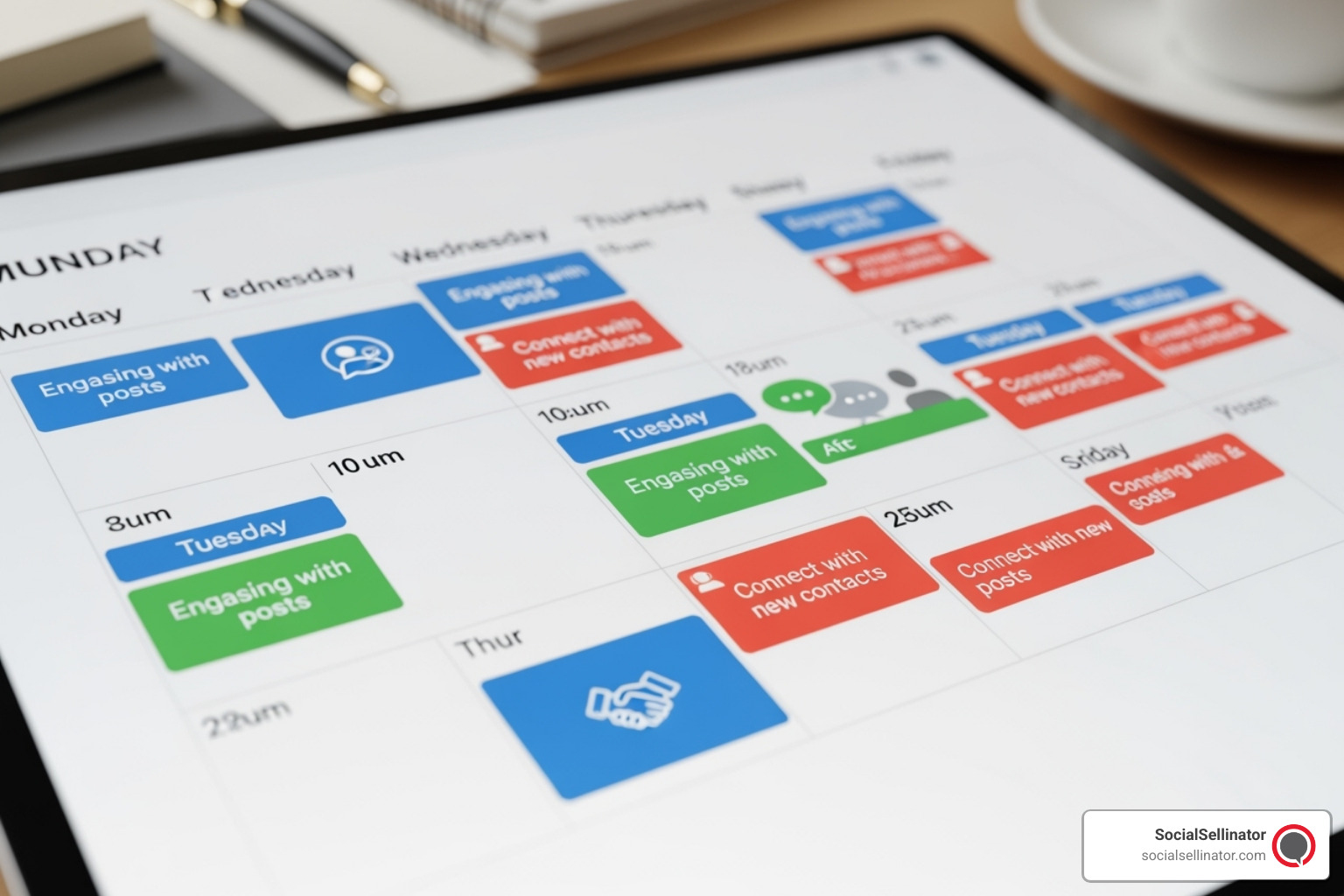 Image metadata: Title: Relationship Cadence Calendar; Alt: A calendar displaying various LinkedIn networking activities scheduled for different days, emphasizing consistency and dedicated time blocks; Concept: LinkedIn relationship building; Format: JPG; Placement: Inline visual; Subject: Nurturing cadence, consistency, engagement rhythm; Rights: Licensed asset managed by SocialSellinator.
The Power of Providing Value in LinkedIn Relationship Building
Give before you expect to receive. This simple principle can transform your LinkedIn presence. Providing value is often simpler than you think:
- Share relevant resources: If you find an article that addresses a connection’s challenge, share it with a personal note.
- Make introductions: When you see a potential synergy between two connections, facilitate an introduction. A warm introduction can start a mutually beneficial relationship, and both parties will remember your help.
- Offer your expertise: If you see a connection struggling with something you know well, offer insights or guidance. This isn’t about free consulting, but about pointing them in the right direction.
This value-first approach builds trust and goodwill. As research shows, buyers are more likely to consider solutions from sellers who demonstrate a clear understanding of their business needs—an understanding developed through consistent, genuine engagement.
Strategic Follow-Ups and Direct Messaging for Effective LinkedIn Relationship Building
Once a connection is accepted, the real work begins. Avoid the immediate sales pitch, which can kill a budding relationship. Instead, start with a genuine thank-you message. Keep it conversational, perhaps sharing a relevant article or asking an open-ended question about their work. Think of it as a “digital coffee.”
Use direct messages to build rapport. When you see a connection celebrate a work anniversary, get a promotion, or start a new role, congratulate them. These small gestures show you’re paying attention. Authenticity in your communication style is crucial; write like you’re talking to a respected colleague—warm, professional, and human. Celebrating milestones is a particularly effective way to maintain and reignite connections over time.
A Practical Nurture Cadence You Can Keep
- Weekly: Engage with 10–15 posts from key contacts. Leave 3–5 meaningful comments. Send 2 value-forward DMs.
- Biweekly: Share one original post that synthesizes lessons from your work or industry. Tag one or two people when truly relevant.
- Monthly: Offer one introduction between people who could benefit each other. Review saved leads and add notes on recent changes.
- Quarterly: Host a small virtual roundtable (4–6 people) around a focused topic. Follow up with a concise recap and top takeaways.
This rhythm keeps you visible without overwhelming your schedule. Protect 30–45 minutes per day for these activities—consistency beats intensity.
Building Relationship Capital Without Overextending
- Set caps: Limit first messages per week to maintain quality. If your replies slow, reduce volume until you can keep pace.
- Track light notes: Use a simple spreadsheet or CRM fields like “Last touch,” “Interests,” and “Next helpful step.” You’ll personalize faster without reinventing the wheel.
- Ladder your value: Start with micro-value (a comment or short tip), move to mid-value (resource or introduction), then macro-value (collaboration or pilot). Earn the right to ask by consistently giving.
Using Technology and Advanced Features
While relationships are built on human connection, technology can improve your LinkedIn relationship building efforts. For serious professionals, tools like LinkedIn Sales Navigator can be a game-changer. Use advanced filters to target the right people so your outreach is relevant and welcome.
Features such as saved searches, alerts on job changes, and relationship insights help you engage at the right moment. Relationship Explorer can also help map connections within target companies, which is crucial for building multiple touchpoints within an organization. This strategy provides stability, as deals are less likely to stall if one of your contacts changes roles. Use these tools to support thoughtful, personalized conversations—not to accelerate generic messaging.
Integrating these efforts with your broader digital marketing, SEO, PPC, and content initiatives ensures your relationship building amplifies brand visibility and pipeline quality at the same time.
Common Pitfalls: Mistakes to Avoid in Your Networking Efforts
Even with the best intentions, it’s easy to make mistakes when building relationships on LinkedIn. Many professionals fall into predictable traps that damage their networking efforts. The biggest mistake is treating LinkedIn like a direct sales channel instead of a relationship-building platform. A transactional mindset is easily detected and often repels potential connections.
Other common pitfalls include shallow prospecting—connecting with everyone without a strategy—and inauthenticity. People have a finely tuned radar for fake interactions. A neglected profile can also undo your outreach efforts, as it’s often the first thing people see after you connect. Finally, a lack of a strategic plan with clear goals and consistent effort will cause even the best techniques to fall flat, a principle that holds true across all growth efforts, including digital marketing, SEO, and content creation.
Top 5 Networking Mistakes on LinkedIn
Let’s dive deeper into the most common mistakes that can sabotage your LinkedIn relationship building efforts:
- The immediate sales pitch: Pitching your services right after connecting is the digital equivalent of proposing on a first date. Give the relationship time to develop naturally.
- Generic, unpersonalized requests: The default connection message shows a lack of genuine interest. Always personalize your request to explain why you want to connect with that specific person.
- Taking without giving: Networking is based on reciprocity. If you’re constantly asking for favors without offering anything in return, your network will become unresponsive.
- Focusing on quantity over quality: Thousands of superficial connections are less valuable than a smaller network of meaningful relationships. Quality connections are the ones who will support your professional growth.
- Being inconsistent: Building relationships requires regular, sustained effort. You can’t disappear for months and reappear only when you need something. Consistency is what transforms connections into genuine professional allies.
A Simple Recovery Playbook When You Slip
- If you pitched too soon: Apologize briefly, restate your interest in learning about their priorities, and offer a relevant resource with no ask attached.
- If you sent a generic request: Follow up with a note explaining what caught your attention and how you hope to exchange ideas going forward.
- If you vanished for months: Re-engage by acknowledging the gap, congratulating a recent milestone, and sharing a short, helpful insight. Keep it light and respectful.
Guardrails That Keep You Consistent
- Define your audience: Be clear about who you help, the problems you solve, and why it matters. This ensures every touchpoint is relevant.
- Set weekly inputs: Messages sent, comments made, resources shared. Inputs are controllable; outcomes are earned.
- Measure relationship signals: Track accepted requests, reply rates, invitations you receive, and referrals. These are leading indicators of trust.
Applied well, these guardrails prevent common pitfalls while strengthening your reputation. Over time, they turn sporadic interactions into a reliable, opportunity-rich network.
Conclusion: Turning Connections into Opportunities
LinkedIn relationship building transforms your professional network from a static contact list into a dynamic ecosystem of mutual support and opportunity. The process involves optimizing your profile, conducting personalized outreach, and consistently nurturing your connections over time.
The real magic happens when you shift your mindset from collecting connections to cultivating relationships. Authenticity always wins. People can sense when you are genuinely interested in their success versus when you are just looking for a sale. The professionals who thrive on LinkedIn are those who consistently provide value and approach networking with a spirit of generosity.
Consistency is your secret weapon. Relationship building is a marathon, not a sprint. The connections you nurture today often become your most valuable professional assets years down the road. The strategies covered in this guide—from profile optimization to avoiding common pitfalls—work together to create a comprehensive approach to professional networking.
When these efforts align with core growth activities—digital marketing, SEO, PPC, and content—you multiply the impact of every conversation. Strong relationships improve message resonance, increase warm introductions, and shorten time-to-trust. Whether you’re an individual contributor or leading a team, build a simple cadence, deliver value at every step, and let your credibility compound.
Headquartered in San Jose, in the heart of Silicon Valley and the San Francisco Bay Area, SocialSellinator proudly provides top-tier digital marketing, SEO, PPC, social media management, and content creation services to B2B and B2C SMB companies. While serving businesses across the U.S., SocialSellinator specializes in supporting clients in key cities, including Austin, Boston, Charlotte, Chicago, Dallas, Denver, Kansas City, Los Angeles, New York, Portland, San Diego, San Francisco, and Washington, D.C.