
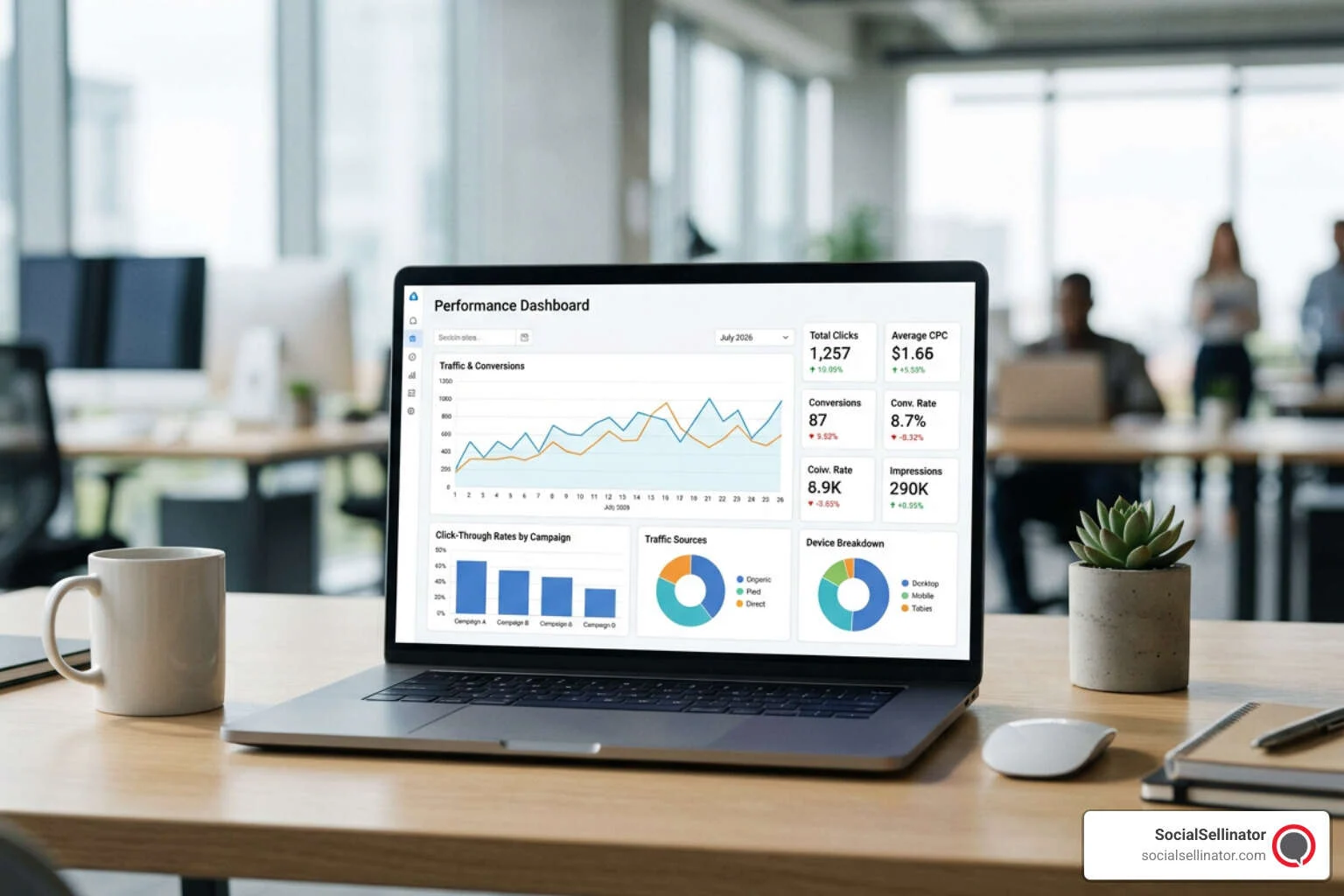
Google Ads Services 101: Find Reliable Experts
Why Finding the Right Google Ads Services Partner Can Make or Break Your ROI
Google Ads Services are professional solutions that help businesses plan, launch, and optimize paid advertising campaigns across Google Ads networks, including Search, YouTube, Google Maps, and the broader Google Display Network.
Quick answer — what to look for in a reliable Google Ads service:
- Proven results — case studies with real conversion and ROI data
- Google Premier Partner status — awarded to the top 3% of agencies worldwide
- Transparent pricing — clear separation of setup fees, management fees, and ad spend
- Full-funnel tracking — conversion tracking connected to actual revenue, not just clicks
- Campaign type expertise — Search, Display, Performance Max, and Local Services Ads
- Smart Bidding and AI knowledge — ability to connect first-party data to Google’s AI systems
- No long-term lock-in without results — a 3-month commitment is reasonable; open-ended contracts without accountability are not
Here’s the problem most marketing managers run into: Google Ads looks straightforward. You pick some keywords, write a headline, set a budget, and hit go. But over 80% of search results now contain paid ad placements, and top positions in competitive industries can cost as much as $40 per click. Without the right strategy, that budget disappears fast — with little to show for it.
The stakes are also higher than ever. In 2025 alone, Google blocked or removed over 8.3 billion ads and suspended 24.9 million advertiser accounts globally. The platform’s AI systems are catching policy violations before ads even reach users — which means getting campaigns live and compliant requires real expertise.
Whether you’re a marketing director at a growing SMB trying to generate consistent leads, or a business owner exploring paid search for the first time, the difference between wasted spend and strong ROI almost always comes down to who is managing your campaigns and how.
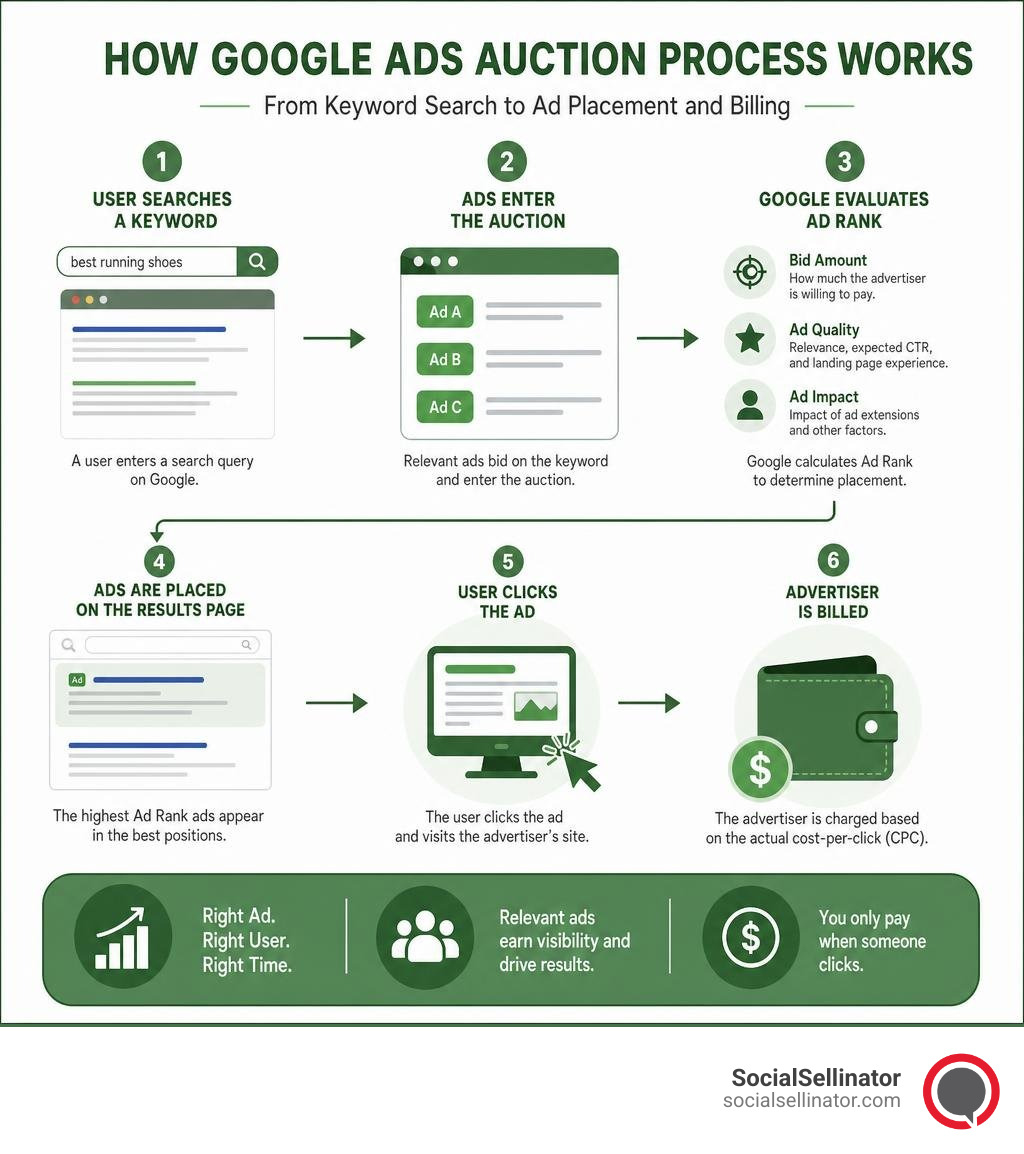
Understanding the Different Types of Google Ads Services
To build a high-performing digital marketing strategy, you must first understand the diverse landscape of campaign types Google offers. The platform has evolved far beyond basic text ads. Today, we have a massive ecosystem of networks, placements, and AI-driven systems designed to capture users at every single stage of the buyer’s journey.
When you partner with professional Google Ads Services, the first step is always identifying which campaign types align with your specific business objectives. Selecting the wrong campaign type is one of the fastest ways to exhaust your budget with minimal return. Let’s break down the core networks and how they function within a comprehensive Google Paid Search Campaign strategy.
Search Campaigns: Capturing High-Intent Traffic
Search campaigns are the undisputed foundation of pay-per-click advertising. These are the text-based ads that appear directly on the search engine results pages (SERPs) when someone actively looks for a product, service, or solution. Because these users are proactively typing in queries, they exhibit incredibly high purchasing intent.
When we configure a Google Paid Search campaign, our primary goal is to secure placements “above the fold.” Research shows that paid ads can cover up to 85% of the space above the fold on mobile and desktop results pages, capturing the vast majority of initial clicks. By targeting highly specific, high-intent keywords, we ensure your business is the very first option potential customers see. The key to success here lies in maximizing your click-through rate (CTR) and optimizing your Quality Score to lower your overall cost-per-click (CPC).
Display and Video Campaigns: Building Brand Awareness
While Search ads capture active demand, Display and Video campaigns are designed to generate new demand and build long-term brand awareness. The Google Display Network reaches over 90% of global internet users across millions of websites, news portals, blogs, and Google-owned properties like Gmail.
Rather than relying on text, Display ads utilize visually engaging imagery and banners to capture attention while users are browsing other content. Video campaigns, primarily served across YouTube, allow you to deliver rich, immersive storytelling directly to your target demographic. By leveraging advanced Google Ads Audience Insights, we can segment audiences based on detailed demographics, affinity groups, in-market behaviors, and remarketing lists. This ensures your visual assets are displayed to the people most likely to resonate with your brand, keeping your business top-of-mind before they even begin their active search.
Performance Max: Leveraging Google AI and Smart Bidding
In July 2026, one of the most powerful tools at our disposal is Performance Max (PMax). Performance Max is an AI-powered, goal-based campaign type that allows advertisers to access all of their Google Ads inventory from a single campaign. This includes Search, Display, YouTube, Discover, Gmail, and Google Maps.
Rather than managing these channels individually, Performance Max leverages Google’s advanced machine learning systems and Smart Bidding to find high-value customers across multiple touchpoints. By analyzing real-time signals such as search history, device, location, and time of day, the AI dynamically generates and optimizes ad creatives and bids to maximize conversions. To get the best results from these campaigns, it is critical to stay updated on the latest Trends to Watch Out For Google Ads and feed the AI high-quality first-party data. When properly configured, Performance Max acts as a force multiplier, scaling your reach and driving unprecedented efficiency.
Local Services Ads vs. Traditional Campaigns
For local service-based businesses, Google offers a highly specialized alternative to traditional PPC: Local Services Ads (LSAs). Understanding the distinction between standard campaigns and LSAs is crucial for local business owners looking to maximize their lead generation efforts. While traditional ads are fantastic for driving website traffic, LSAs are built for one specific outcome: direct customer contact.
Whether you are running a home services business, a healthcare clinic, or an automotive shop, integrating LSAs with your broader digital marketing efforts can completely transform your local visibility. Let’s explore how these campaigns work and why they require a different strategic approach than a standard Google Adwords Smart Campaign Complete Guide.
How Local Services Ads Differ from Standard Google Ads Services
The most significant difference between Local Services Ads and traditional campaigns is the payment model. While standard Adwords campaigns operate on a pay-per-click (PPC) model—where you pay every time someone clicks your ad, regardless of whether they contact you—LSAs operate on a pay-per-lead model. This means you only pay when a prospective customer takes a direct action, such as calling your business, sending a text message, or booking an appointment directly through the ad.
LSAs appear at the very top of the Google search results, even above traditional paid search ads and organic local map packs. They display essential business information at a glance: your business name, star rating, service area, operating hours, and a prominent call button. Additionally, the LSA platform features a robust lead dispute process. If you receive an invalid lead—such as a spam call, a solicitation, or a inquiry for a service or location you do not support—you can dispute the charge with Google to secure a refund, ensuring your budget is spent solely on genuine opportunities.
Why Businesses Trust Certified Google Ads Services Experts
To run Local Services Ads, businesses must undergo a rigorous screening and verification process to earn the coveted Google Verified Badge (often referred to as the Google Guaranteed or Google Screened badge, depending on the industry). This badge is displayed directly on your ad, serving as an incredibly powerful trust signal for potential customers.
Earning this badge requires passing detailed background checks, business license verifications, and insurance checks. For industries like healthcare, legal, or home services, this process can be complex and time-consuming. Working with a certified Google Adwords Expert ensures that your business documentation is submitted flawlessly, accelerating your approval time. Once verified, the badge acts as an immediate trust accelerator, giving first-time customers the confidence to choose your business over competitors who lack verification.
Setting Your Budget and Understanding Cost Structures
One of the most common questions we receive from business owners is: “How much should I spend on Google Ads?” The truth is, there is no one-size-fits-all answer. Your ideal budget depends heavily on your industry, geographic location, target keywords, and overall business goals.
Understanding the cost structures of digital advertising is the first step to allocating your marketing dollars wisely. Let’s look at how budgets are structured and how to map out your costs before launching a campaign.

Pay-Per-Click (PPC) vs. Pay-Per-Lead Models
When planning your budget, you must decide whether to focus on pay-per-click (PPC) or pay-per-lead models. In a traditional PPC campaign, your daily budget is spread across clicks. The cost of each click is determined by a real-time auction, where factors like competitor bids and your Quality Score dictate the final price. Highly competitive search terms, such as those in legal or financial services, can easily exceed $40 per click.
In contrast, the pay-per-lead model used in LSAs charges you a fixed or dynamic rate per qualified inquiry. While the cost-per-lead is generally higher than a single cost-per-click, the conversion rate from a lead to a paying customer is often much higher because the user has already taken a direct action to contact you. To determine the most efficient model for your business, we recommend utilizing a Google Ads Cost Calculator to compare estimated acquisition costs and map out your projected ROI. For a deeper dive into budgeting and agency fee structures, you can also review our comprehensive guide on Pricing Google Advertising.
How Small Businesses Can Compete on a Limited Budget
It is a common misconception that small businesses with modest budgets cannot compete with multi-million dollar corporations on Google Ads. While large brands may have massive budgets, they often target broad, high-volume keywords that carry immense waste. Small businesses can achieve exceptional campaign efficiency by deploying highly targeted, hyper-local strategies.
To make a limited budget stretch further, we focus on three core tactics:
- Long-Tail Keywords: Instead of bidding on expensive, highly competitive terms like “plumber,” we target highly specific phrases like “emergency water heater repair in San Jose.” These long-tail keywords have lower search volume, but they carry significantly lower competition, cheaper CPCs, and much higher conversion intent.
- Hyper-Targeted Geo-Targeting: We restrict your ads to serve only within specific postal codes, neighborhoods, or a tight radius around your physical location. This prevents you from paying for clicks from users outside your operational service area.
- Ad Scheduling (Dayparting): We configure your campaigns to run only during your active business hours when your team is fully available to answer phone calls and respond to form submissions instantly.
By implementing these precise guardrails, you can build a highly profitable campaign without breaking the bank. For more actionable strategies on maximizing a small budget, check out our guide on how to build Your Ad Empire Effectively Manage Google Ads.
Step-by-Step Guide to Setting Up a Successful Campaign
Setting up a Google Ads campaign requires a methodical, structured approach. A single misconfigured setting can lead to rapid, wasted ad spend. Below, we outline the fundamental steps to launch a campaign built for sustained performance.
To ensure you don’t miss a single step during this process, we recommend following our dedicated checklist on how to Set Up Google Ads Campaign.
Keyword Research and Ad Copywriting Best Practices
The success of your campaign rests entirely on the foundation of your keyword research and the persuasiveness of your ad copy. We begin by identifying search terms that reflect high commercial intent. When selecting keywords, it is critical to understand and utilize keyword match types:
- Exact Match: Your ads only show when a search query matches your keyword exactly or shares the exact same meaning. This offers the highest control but lower volume.
- Phrase Match: Your ads show on searches that include the meaning of your keyword, allowing for variations before or after the phrase.
- Broad Match: Your ads show on searches related to your keyword. While this drives the most traffic, it requires strict monitoring to avoid irrelevant clicks.
To prevent your budget from being wasted on unrelated searches, you must build a comprehensive negative keyword list. For example, if you sell premium, high-end watches, you should add “free,” “cheap,” and “repair” as negative keywords.
Once your targeting is set, your ad copy must be written to stand out. Your headlines should directly address the user’s search query, highlight your unique value proposition, and include a clear, compelling call to action. Aligning your ad copy perfectly with your targeted keywords is essential for achieving a high Quality Score, which directly lowers your cost-per-click. For proven copywriting frameworks, explore our guide on Google Ads How to Write Search Campaign Ads.
Connecting Analytics and Tracking Key Metrics
Launching your campaign is only the beginning. To continuously optimize performance, you must establish robust conversion tracking by connecting your Google Ads account with Google Analytics 4 (GA4). Without accurate tracking, you are essentially flying blind.
By integrating your campaigns with advanced Google Ads Analytics Tools, we can track exact user actions, such as form submissions, phone calls, e-commerce purchases, and even offline CRM milestones. This data flows directly back into Google’s machine learning algorithms, allowing Smart Bidding to optimize your bids in real-time for maximum conversion volume.
The primary metrics we monitor to measure campaign health and ROI include:
- Conversion Rate (CVR): The percentage of ad clicks that result in a desired action.
- Cost Per Acquisition (CPA): How much it costs to generate a single lead or sale.
- Click-Through Rate (CTR): The ratio of users who click on your ad to the number of total views.
- Quality Score: Google’s rating of the relevance and quality of your keywords, ads, and landing pages.
Frequently Asked Questions About Google Ads
Navigating paid advertising can feel overwhelming. To help you make informed decisions, we have compiled answers to some of the most common questions businesses ask when exploring professional PPC services. If you are brand new to the platform, we highly recommend starting with our comprehensive Google PPC Tutorial for a foundational overview.
What is the typical cost of Google Ads?
The cost of Google Ads varies wildly depending on your industry, competition, and geographical market. On average, businesses across all industries experience a cost-per-click (CPC) ranging from $2.00 to $5.00 on the Search Network. However, in highly competitive niches like legal, insurance, or enterprise software, CPCs can easily scale to $40.00 or more.
For a realistic expectation of what businesses in your specific sector spend, you can review our compiled Google Ads Benchmarks. Generally, we recommend a starting budget of at least $1,000 per month for small businesses to gather enough initial performance data to optimize effectively.
How long does it take to see results from a campaign?
While Google Ads can technically start driving traffic to your website the exact moment your campaign goes live, achieving an optimized, highly profitable campaign takes time. The first 30 days are typically a data-collection phase where we identify which keywords, ad copy variations, and audience segments perform best.
We generally recommend a minimum 3-month commitment when launching a new campaign. This optimization period allows us to refine match types, build out robust negative keyword lists, and allow Google’s AI-driven Smart Bidding systems to fully learn and adapt to your audience’s behavior. A professional Google PPC Consultant uses this period to continuously trim waste and scale high-performing assets, turning raw data into a predictable lead-generation engine.
Should I manage my campaigns myself or hire an agency?
While it is entirely possible to set up and manage a basic Google Ads campaign in-house, doing so effectively requires a significant, ongoing time commitment and specialized expertise. Without daily monitoring, optimization, and a deep understanding of bidding strategies, it is incredibly easy to burn through your marketing budget with very little return.
Partnering with a certified digital marketing agency brings immediate, strategic advantages. Certified Premier Partners have direct access to dedicated Google support, beta features, and advanced optimization tools. An agency handles the complex, daily heavy lifting—from keyword expansion and negative keyword auditing to landing page testing and CRM integration—allowing your internal team to focus entirely on running your business. To understand how professional management can maximize your campaign’s efficiency, read more about the Agency Advantage Maximize Google Ads for Your Clients.
Conclusion
Google Ads remains one of the most powerful and immediate ways to connect with high-intent buyers at the exact moment they are looking for your products or services. However, as the platform becomes increasingly complex and reliant on advanced AI systems, navigating it successfully requires a partner with deep technical expertise and a focus on measurable business growth.
At SocialSellinator, we specialize in demystifying paid search and building customized, high-converting campaigns that align perfectly with your unique business goals. Whether you are looking to scale your local visibility with Local Services Ads, dominate the search results with targeted Search campaigns, or leverage the full power of Performance Max, our experienced team is here to guide you every step of the way.
Ready to stop wasting ad spend and start generating consistent, high-quality leads? Explore our dedicated SocialSellinator Google Advertising Services and let us help you turn search intent into measurable revenue.
Headquartered in San Jose, in the heart of Silicon Valley and the San Francisco Bay Area, SocialSellinator proudly provides top-tier digital marketing, SEO, PPC, social media management, and content creation services to B2B and B2C SMB companies. While serving businesses across the U.S., SocialSellinator specializes in supporting clients in key cities, including Austin, Boston, Charlotte, Chicago, Dallas, Denver, Kansas City, Los Angeles, New York, Portland, San Diego, San Francisco, and Washington, D.C.