
From Likes to Leads: How to Win with Digital Marketing on Facebook
Why Facebook Still Dominates Social Media Marketing in 2025
Digital marketing in facebook remains one of the most powerful and indispensable strategies for reaching customers and growing a business in the modern digital landscape. Despite the rise of newer platforms, Facebook’s sheer scale is undeniable. With nearly 3 billion monthly active users who spend an average of 33 minutes daily on the platform, it offers unparalleled opportunities for businesses to connect with a vast and diverse target audience. The numbers tell a compelling story: Facebook’s advertising revenue exceeded $113 billion in 2022, a testament to the fact that businesses continue to see real, tangible value from their investment. More importantly, a staggering 78% of American consumers have discovered products to purchase on Facebook, solidifying its role as a critical platform for driving actual sales, not just building brand awareness.
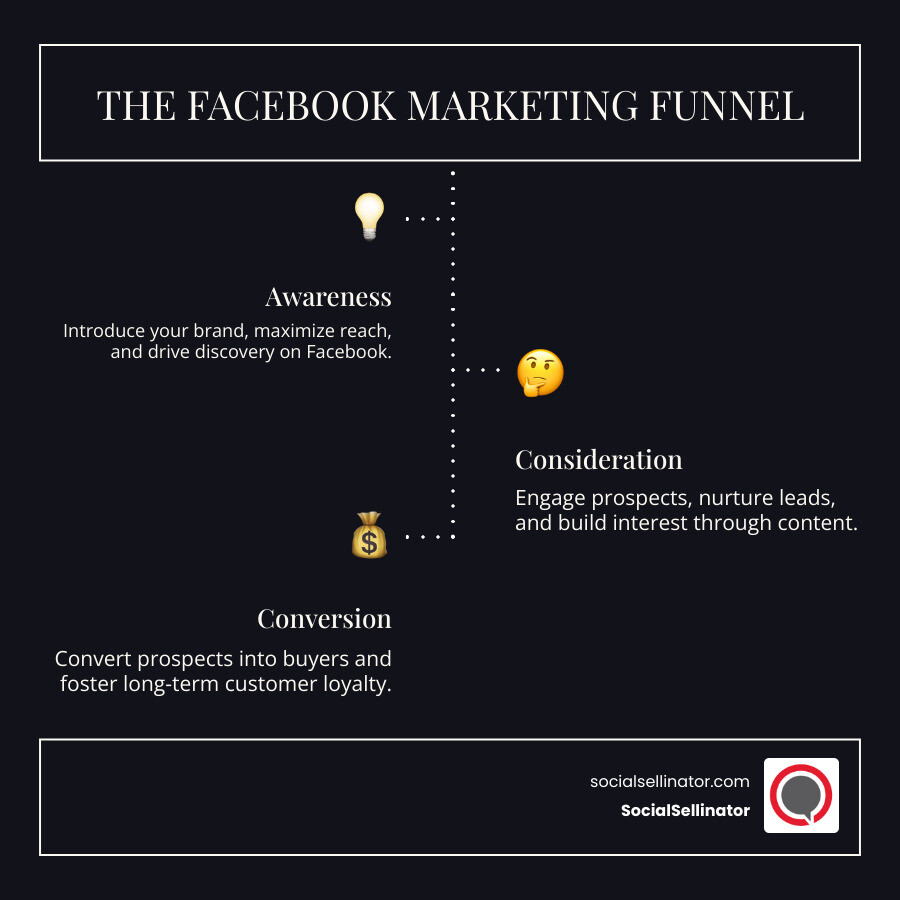
What makes Facebook uniquely powerful is its ability to serve businesses at every single stage of the marketing funnel. Whether your goal is to introduce your brand to new customers at the top of the funnel, nurture qualified leads through the consideration phase, or convert prospects into loyal buyers, Facebook provides the sophisticated tools and massive audience to make it happen. A comprehensive and effective strategy must integrate several key components to work in harmony:
- Organic Marketing: This is the foundation of your presence. It involves creating and sharing engaging posts, videos, stories, and other content designed to build a genuine community and foster authentic connections with your audience.
- Paid Advertising: This is the amplifier. By running highly targeted ad campaigns using the robust Facebook Ads Manager, you can reach specific demographics, interests, and behaviors, ensuring your message gets in front of the people most likely to convert.
- Social Commerce: This closes the loop. By leveraging features like Facebook Shops and product catalogs, you can sell products directly on the platform, creating a seamless and frictionless buying experience for customers.
- Community Building: This fosters loyalty. Using tools like Facebook Groups and interactive Page features, you can cultivate strong customer relationships, turning one-time buyers into lifelong brand advocates.
Companies that masterfully combine authentic organic content with data-driven, strategic paid advertising consistently see the best results. Those that focus only on one approach often struggle to maximize their reach, engagement, and ultimately, their return on investment. The key is to treat Facebook as more than just a social network. It is a comprehensive marketing ecosystem where authentic engagement directly fuels real business outcomes. When executed correctly, Facebook marketing transforms casual browsers into loyal customers and passionate brand advocates, creating a sustainable engine for growth.
Building Your Foundation: A Winning Facebook Marketing Strategy
Every successful digital marketing in facebook campaign is built upon a rock-solid foundation. Your Facebook Business Page is that foundation—it’s your brand’s digital storefront, the first point of contact where potential customers form their crucial first impressions. Optimizing your Page with a complete profile, high-quality cover and profile photos, and a clear call-to-action button is a non-negotiable first step. Getting this right from the very beginning saves you countless headaches and missed opportunities down the road.
However, a common pitfall for many businesses is jumping straight into posting content without a clear definition of what success actually looks like. Setting SMART goals is absolutely crucial for your Facebook marketing efforts. These goals must be Specific, Measurable, Achievable, Relevant, and Time-bound. A vague goal like “we want more followers” is useless. A SMART goal, in contrast, would be “we aim to increase qualified leads generated through Facebook Lead Ads by 25% over the next three months, with a target cost per lead of under $15.” This provides a clear target to work toward, a benchmark to measure against, and holds your strategy accountable. Your goals might focus on brand awareness (e.g., reach 500,000 local users in Q3), lead generation, or direct sales through Facebook’s commerce features, but they must always align with your overarching business objectives.
Defining Your Audience for Maximum Impact
Once you’ve nailed down your goals, the real magic begins with understanding exactly who you’re trying to reach. The businesses that achieve phenomenal success on Facebook are the ones that know their audience inside and out. Creating detailed buyer personas is an essential exercise. This goes beyond basic demographics. It’s like having a conversation with your ideal customer before you ever write a single post. These are rich, semi-fictional profiles that include their interests, online behaviors, pain points, motivations, and daily habits. What other pages do they follow? What kind of content makes them stop scrolling? What problems are they trying to solve that your product or service addresses?
Facebook Audience Insights is a powerful free tool that reveals incredible details about your potential customers, from their relationship status and job titles to their purchasing behaviors and life events. The real power, however, is unlocked when you start using Custom Audiences and Lookalike Audiences. Custom Audiences allow you to reconnect with a warm audience of people who already know your business, such as website visitors, email subscribers, or users who have engaged with your Page. Lookalike Audiences are a game-changer for scaling; you provide Facebook with a source audience (like your best customers), and its algorithm finds thousands or even millions of other users who share similar characteristics. It’s a highly effective and efficient way to find new, qualified prospects.
Creating a Content Plan That Resonates
Now comes the creative part: developing a content strategy that your audience actually wants to see and engage with. Content pillars are your guiding stars—the core themes or topics that everything you post should tie back to. These pillars, derived from your buyer personas’ interests and pain points, keep your content strategy focused and consistent, giving your audience clear expectations. A professional approach to content creation involves planning this out in advance.

Variety is key to keeping your feed fresh and engaging. Your post types should be a healthy mix of engaging text updates, high-quality images, compelling videos, and ephemeral Facebook Stories and Reels. Remember that posts with visuals get 2.3 times more engagement than text-only posts. Video content is particularly powerful, but since many videos are watched without sound, you must always include subtitles or captions to ensure your message is accessible and effective.
Consistency beats perfection every time. A well-structured content calendar is your best friend, helping you maintain a steady stream of valuable posts that Facebook’s algorithm loves. While there are general studies on optimal posting times, every audience is unique. You must test different days and times and let your own Page Insights guide you. Don’t forget the power of user-generated content (UGC)—sharing photos or testimonials from happy customers is authentic social proof that builds trust in ways traditional advertising simply can’t. Finally, maintain a consistent brand voice and religiously follow the 80/20 rule: 80% of your content should educate, entertain, or inspire your audience, while only 20% directly promotes your products or services. This balance ensures you’re providing value, not just constantly selling.
The Power of Paid: A Deep Dive into Digital Marketing in Facebook Ads
While building organic reach is a valuable long-term goal, the sheer scale and competitive nature of the Facebook news feed mean that paid advertising is essential for maximizing your reach, speed, and impact. Think of Facebook Ads as your express lane to a hyper-targeted audience. The benefits are immense: unparalleled scalability, allowing you to reach millions of potential customers; and incredible precision targeting, enabling you to pinpoint users based on specific demographics, niche interests, online behaviors, and even life events.
Facebook’s advertising platform operates on what is effectively a “pay to play” model for businesses seeking significant growth. To truly cut through the noise, reach new customer segments, and drive predictable results, a strategic and well-managed investment in ads is necessary. A professional approach to digital marketing in facebook leverages these powerful paid tools to design, execute, and optimize high-impact campaigns that deliver a measurable return on investment.
A critical, non-negotiable component of any serious paid advertising strategy is the Facebook Pixel (now Meta Pixel). This small piece of code, installed on your website, is the bridge between Facebook and your business property. It allows you to track user behavior, measure conversions accurately, optimize your ads for specific actions, and build powerful retargeting campaigns. It’s how you can understand the full customer journey, from the initial ad click to the final purchase. We also recommend extensive and systematic A/B testing. This involves running multiple versions of ads with small budget allocations to scientifically determine which creatives, copy, headlines, and targeting options perform best before scaling up your investment. This data-driven approach ensures you deliver ads that resonate and convert, with no budget wasted on guesswork.
Choosing the Right Facebook Ad Formats
Facebook offers a diverse and ever-evolving array of ad formats, each designed and suited for different campaign objectives. Choosing the right format is crucial for maximizing the effectiveness of your creative and your budget.
- Image Ads: Simple, clean, and powerful. These are great for driving traffic or showcasing products with a single, compelling, high-quality visual. They are the workhorse of many campaigns.
- Video Ads: Highly engaging and perfect for capturing attention in a busy feed. Ideal for telling a brand story, demonstrating a product in action, or sharing customer testimonials. Remember to design for sound-off viewing by using subtitles.
- Carousel Ads: This dynamic format allows you to display up to 10 images or videos, each with its own link, in a single, swipeable ad. It’s perfect for showcasing multiple products, highlighting different features of a single product, or telling a sequential story.
- Collection Ads: A mobile-first, immersive format that pairs a primary video or image with a grid of related products below it. When tapped, it opens a full-screen Instant Experience, creating a seamless browsing and shopping environment without leaving the Facebook app.
- Lead Ads: Designed to make lead generation effortless. This format includes a pre-filled form with the user’s Facebook contact information, making it incredibly easy for them to sign up for a newsletter, request a quote, or download a resource without ever leaving the platform.
- Dynamic Ads: A powerful tool for e-commerce and retargeting. These ads automatically promote relevant products from your catalog to people who have already shown interest on your website, in your app, or elsewhere online. It’s personalization at scale.
Navigating Facebook Ads Manager Like a Pro
Facebook Ads Manager is the central command center for creating, managing, and tracking all of your advertising campaigns. It’s an incredibly powerful tool that requires a strategic and organized approach. Campaigns are structured in a clear three-tiered hierarchy:
- Campaign Level: This is the highest level, where you define your single marketing objective (e.g., Brand Awareness, Traffic, Lead Generation, Sales/Conversions). This choice dictates the optimization and delivery options available for your campaign.
- Ad Set Level: This is where the strategic targeting happens. You define the audience (demographics, interests, behaviors, custom audiences), set the budget (daily or lifetime) and schedule, and select your ad placements (e.g., Facebook Feed, Instagram Stories, Messenger, Audience Network).
- Ad Level: This is where the creative comes to life. You craft the ad copy, upload the visuals (images or videos), write the headline, and choose the most appropriate call-to-action (CTA) button (e.g., “Shop Now,” “Learn More,” “Download”).
Careful management of these elements, combined with constant monitoring and A/B testing, is the key to achieving optimal performance. Facebook Ads Manager also provides robust and customizable reporting, allowing you to monitor dozens of key metrics and make real-time adjustments to ensure your campaigns are always performing at their peak.
Mastering Organic Reach and Community Building
Building authentic, lasting relationships on Facebook doesn’t require a massive advertising budget—it requires a commitment to genuine engagement and strategic community building. While paid ads are essential for amplifying your reach and driving targeted traffic, your organic efforts form the foundation of sustainable customer relationships and true brand loyalty. This is a core tenet of successful digital marketing in facebook.
The secret to organic success lies in understanding that Facebook’s algorithm rewards meaningful interactions. The platform’s goal is to keep users on the platform longer, so it prioritizes content that people genuinely connect with. When your content sparks real conversations, receives thoughtful comments, and gets shared by your followers, the algorithm takes notice and shows your content to a wider audience, creating a virtuous cycle of increased organic reach.
Facebook Groups offer a powerful and often underutilized opportunity for organic growth. Instead of creating your own branded group immediately, a smart strategy is to start by joining existing groups where your ideal customers already congregate. Participate authentically, share valuable insights, and establish yourself as a helpful resource to build trust and authority naturally. Facebook Live is another game-changer for engagement, as live videos receive significantly more watch time and comments than pre-recorded content. They offer a raw, unpolished look at your brand that audiences appreciate. Don’t overlook Facebook Stories and Reels for showing your brand’s personality through short-form, casual, and behind-the-scenes updates.
Here’s a critical mistake many businesses make: they post their content and then disappear. Responding to comments and messages promptly and thoughtfully is absolutely essential for maintaining visibility and fostering community. Facebook’s algorithm favors posts that generate ongoing conversations. When someone takes the time to comment, responding quickly (ideally within a few hours) keeps the conversation alive, encourages others to join in, and signals to Facebook that your content is valuable and engaging. This simple act of dedicated social media management can transform casual followers into a highly engaged and loyal community.
Best Practices for Engaging Content
Creating content that consistently stops the scroll requires a deep understanding of what makes people pause, think, and engage. Interactive posts consistently outperform static, one-way content. Ask your audience a direct question, run a poll to gather opinions, or create a fun quiz to invite active participation. Simple questions like, “What’s your biggest challenge with [relevant topic]?” can generate dozens of insightful comments that not only boost your organic reach but also provide valuable market research.
Contests and giveaways remain powerful engagement drivers when executed correctly. Create contests that align with your brand and encourage user participation, such as asking customers to share photos using your product with a specific hashtag. Behind-the-scenes content is incredibly effective at humanizing your brand. Show the faces behind your company, the creative process of making your product, or a day in the life at your office. This transparency builds immense trust and makes your brand feel more relatable and approachable. Of course, high-quality visuals are non-negotiable, and as mentioned, all videos should have subtitles to ensure your message gets across to the widest possible audience.
Using Facebook for Customer Service and Reputation Management
Your Facebook page often serves as a public-facing customer service desk, and how you handle interactions there has a significant and lasting impact on your brand’s reputation. It’s crucial to respond to all reviews—both positive and negative—in a timely and professional manner. For positive reviews, a simple, personalized thank you goes a long way in making that customer feel seen and appreciated.
Negative reviews, while daunting, are actually opportunities to showcase your excellent customer service skills. Acknowledge the issue publicly and quickly, apologize sincerely when appropriate, and always offer to take the conversation offline to resolve the problem privately. This public-to-private approach shows other potential customers that you take feedback seriously and are committed to making things right. This can often turn a negative situation into a net positive for your brand’s reputation. Proactive engagement, such as creating a pinned post with FAQs or sharing helpful tips and information, can also prevent many common issues from escalating. Building trust through consistent, transparent, and helpful engagement creates a positive reputation that attracts new customers and retains existing ones.
Measure What Matters: Tracking, Analyzing, and Optimizing Your Performance
If you’re not meticulously measuring your results in digital marketing in facebook, you’re essentially flying blind and wasting money. Fortunately, Facebook provides a suite of powerful native tools to track exactly what’s working and what isn’t, allowing for a data-driven approach to strategy. Think of Facebook Page Insights as your performance dashboard for all organic content, providing data on reach, engagement, and audience demographics. For a more holistic view, Meta Business Suite gives you a bird’s-eye perspective of both your Facebook and Instagram accounts in one centralized location.
For your campaigns to be truly successful, you must focus on the metrics that actually matter to your bottom line. Vanity metrics like page likes can be misleading. Instead, focus on actionable data. Reach tells you how many unique people saw your content, while Engagement Rate (likes, comments, shares divided by reach) shows the percentage of people who actively interacted with it. For paid campaigns, Click-Through Rate (CTR) reveals how compelling your ad creative and copy are, while Cost Per Action (CPA) or Cost Per Lead (CPL) shows what you’re paying for specific outcomes like leads, sign-ups, or sales. But the real superstar metric, the one that executives care about, is Return On Ad Spend (ROAS). This number tells you exactly how much revenue you’re generating for every single dollar you invest in ads, proving whether your marketing is a business expense or a true profit center.
Essential Metrics for Your Efforts
Beyond the basics, a few deeper metrics can make or break your success and provide a more nuanced understanding of your performance. Conversion Rate is critical; it shows the percentage of people who take a desired action (like making a purchase) after clicking your ad. The average conversion rate on Facebook for sales is a healthy 8.25% across all industries, proving the platform’s immense potential for driving direct revenue. It’s also vital to keep a close eye on Frequency—the average number of times the same person saw your ad. If your frequency gets too high (e.g., above 5-7 in a short period for a prospecting campaign), you risk ad fatigue, which can annoy your audience, lead to negative feedback, and cause your ad performance to plummet.
Tracking your social media ROI effectively is paramount. The key is to set clear, measurable goals from the start and use robust tracking methods, like the Facebook Pixel and Conversion API, to trace which social media efforts lead to website visits, leads, and ultimately, sales. This closed-loop reporting is what separates professional, successful Facebook marketing from expensive, hopeful experiments. When you can definitively and confidently say, “This specific Facebook campaign generated $10,000 in sales for a $2,000 ad spend, resulting in a 5x ROAS,” you’ve transformed your marketing from a cost center into a predictable and scalable growth engine.
From Data to Decisions: How to Optimize Your Campaigns
Having access to data is worthless unless you use it to make smarter, faster decisions. Optimization is the continuous process of identifying patterns in your performance data and making strategic adjustments to improve results. When analyzing campaign performance, look for trends. Which ad creative formats (video, carousel, image) get the most engagement? Which audience segments (e.g., Lookalike 1% of purchasers vs. interest-based) are most profitable? Which ad copy headline drives the highest CTR? These patterns become the foundation for smarter, data-informed decisions.
Scaling winning ads is a key optimization strategy. When an ad set or ad is delivering a low CPA and a high ROAS, you should gradually increase its budget to maximize its impact and capture more of that positive result. Conversely, pausing underperforming ads is just as important. You must be disciplined and quickly cut off ads that aren’t meeting your key performance indicators (KPIs). This prevents wasted spending and frees up that budget to be reallocated to better-performing campaigns or new tests.
The secret sauce to long-term success is continuous improvement through systematic A/B testing. You should always be testing different elements in a controlled manner—new headlines, different images or videos, various audience segments, alternative calls-to-action, or different landing pages. This iterative, scientific approach ensures your campaigns are constantly evolving and improving over time. A steadfast commitment to this data-driven optimization process is what turns raw Facebook data into actionable strategies that drive real, sustainable business growth.
Conclusion: Turning Your Facebook Strategy into Sustainable Growth
In 2025 and beyond, digital marketing in facebook is not just another optional channel—it’s a foundational, non-negotiable component of how successful businesses connect with customers and drive revenue. With its massive, engaged user base and a proven, high ROI for advertisers across countless industries, the platform offers a comprehensive and integrated ecosystem designed to support the entire customer journey, from initial awareness to passionate brand advocacy.
The secret to achieving sustainable growth on the platform lies in a holistic, integrated approach that masterfully combines authentic organic content with strategic, data-driven paid advertising. Your organic posts, stories, and community engagement build genuine relationships and foster loyalty, creating a warm audience that trusts your brand. Paid ads then act as a powerful amplifier and a precision tool, ensuring your best messages reach the right people at the right time to drive specific, measurable actions. The businesses that consistently win on Facebook are those that truly understand their audience, invest in high-quality content creation, and use data to continuously measure, analyze, and optimize every facet of their efforts.
At SocialSellinator, we believe every business deserves to unlock Facebook’s full potential for growth. Our experienced team combines cutting-edge strategies with proven, data-backed techniques to deliver measurable results that directly impact your bottom line. We don’t just manage your Facebook presence—we partner with you to transform it into a reliable and predictable growth engine. Whether you’re looking to build brand awareness, generate a consistent flow of quality leads, or drive direct e-commerce sales, our comprehensive digital marketing solutions are designed to help you achieve your most ambitious goals.
Headquartered in San Jose, in the heart of Silicon Valley and the San Francisco Bay Area, SocialSellinator proudly provides top-tier digital marketing, SEO, PPC, social media management, and content creation services to B2B and B2C SMB companies. While serving businesses across the U.S., SocialSellinator specializes in supporting clients in key cities, including Austin, Boston, Charlotte, Chicago, Dallas, Denver, Kansas City, Los Angeles, New York, Portland, San Diego, San Francisco, and Washington, D.C.